Nutrition Research
2025 USDA Guidelines: How Much Protein, Carbs, and Fat Should You Eat?
Protein targets changed significantly. Carbs and fat ranges stayed the same but quality guidance tightened. Here is the full macro picture from the 2025-2030 Dietary Guidelines.
Short Answer
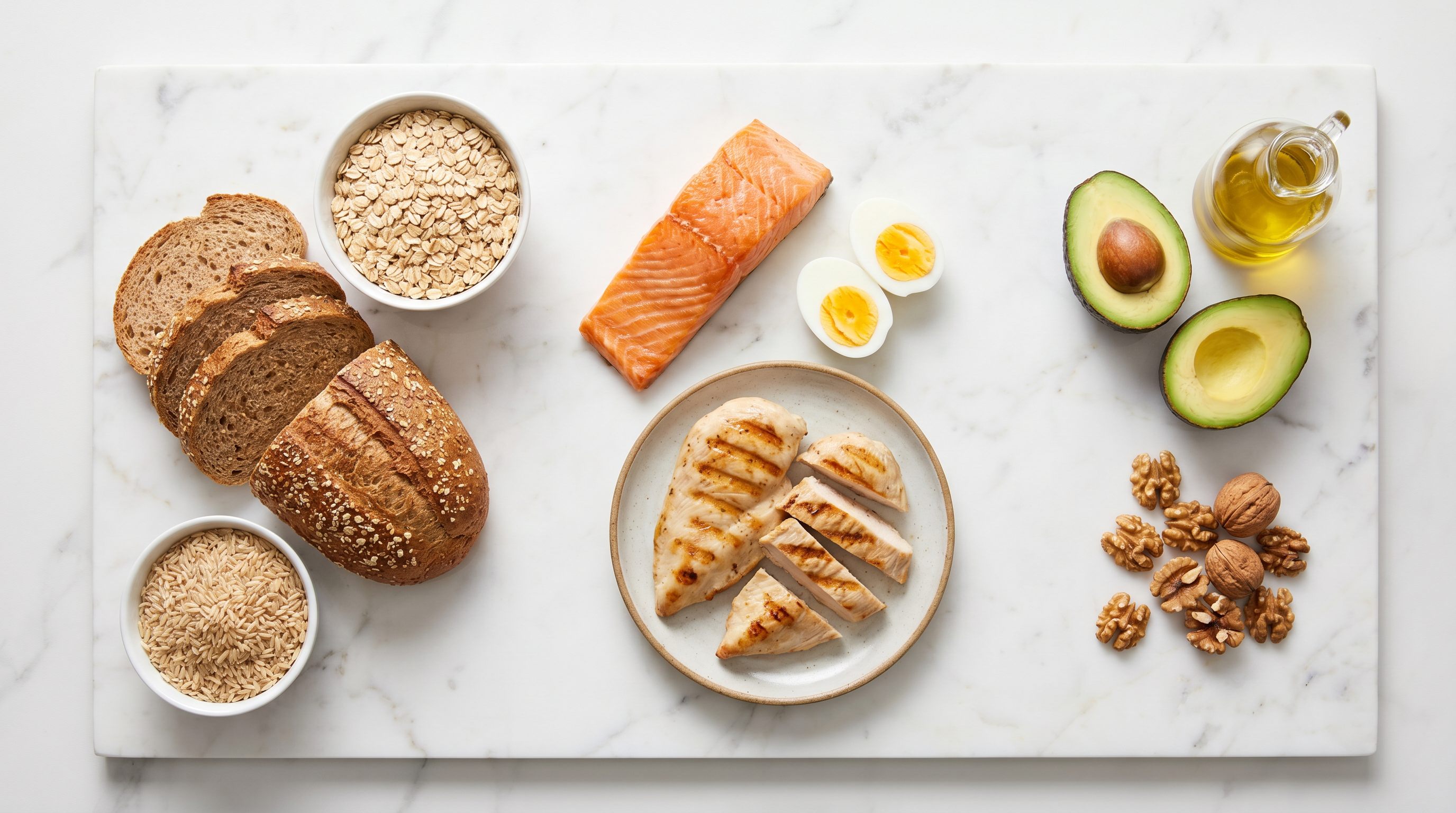
Per the 2025-2030 USDA Dietary Guidelines: protein at 1.2-1.6g per kg of body weight (up significantly from 0.8g per kg), carbohydrates at 45-65% of total calories from whole food sources, fat at 20-35% of total calories with emphasis on unsaturated sources. The protein recommendation is the biggest change. Carb and fat ranges are unchanged but quality guidance is stricter.
The 2025-2030 Dietary Guidelines for Americans were released in January 2026. They cover what and how much to eat to support health across the lifespan. For anyone who tracks macros, three numbers matter most: how much protein, how many carbs, and how much fat per day.
This post covers all three, what changed from the previous guidelines, what stayed the same, and what the numbers actually look like in grams per day based on your body weight and calorie target.
Protein: The Biggest Change
The 2025-2030 guidelines raised the practical protein recommendation to 1.2-1.6g per kg of body weight per day for general adult health. The previous baseline of 0.8g per kg was the Recommended Dietary Allowance set by the National Academy of Medicine, designed to prevent deficiency in sedentary adults. The new guidelines explicitly recognize that this number is insufficient for muscle health, weight management, and healthy aging across the broader adult population.
| Body weight | Old protein target (0.8g/kg) | New protein target (1.2-1.6g/kg) |
|---|---|---|
| 130 lbs (59 kg) | 47g per day | 71-94g per day |
| 150 lbs (68 kg) | 54g per day | 82-109g per day |
| 175 lbs (79 kg) | 64g per day | 95-127g per day |
| 200 lbs (91 kg) | 73g per day | 109-145g per day |
Active adults should target the higher end of the 1.2-1.6g range. People building muscle follow ISSN guidelines at 1.6-2.2g per kg, which align with and extend the new USDA baseline.
Get your exact protein target: Free Protein Calculator, updated to the 2025-2030 USDA guidelines.
Carbohydrates: Same Range, Stricter Quality Rules
The Acceptable Macronutrient Distribution Range for carbohydrates remains 45-65% of total daily calories. On a 2,000 calorie diet, that is 225-325g per day. On a 2,500 calorie diet, 281-406g per day.
What changed is the guidance on carbohydrate quality. The 2025 guidelines are the first to explicitly name ultra-processed foods as something to limit, separate from added sugars and refined grains. Practical implications:
| Carb source | 2025 guidance |
|---|---|
| Whole grains (oats, brown rice, quinoa, whole wheat) | Prioritise, at least half of all grains |
| Vegetables and legumes | Increase, especially non-starchy vegetables |
| Fruit (whole) | Prioritise over juice |
| Added sugars | Under 10% of total calories (unchanged) |
| Ultra-processed foods | Limit (new, first time named explicitly) |
| Refined grains (white bread, white rice) | Minimise |
Fiber targets
Fiber recommendation: 14g per 1,000 calories consumed, or 25g per day for women and 38g per day for men. This is unchanged from previous guidelines but consistently under-consumed. Higher fiber intake is one of the most evidence-backed interventions for digestive health, blood sugar control, and satiety.
Fat: Same Range, Focus on Quality
The AMDR for fat remains 20-35% of total daily calories, unchanged. On a 2,000 calorie diet, that is 44-78g per day. The 2025 guidelines continue to recommend limiting saturated fat to under 10% of calories (22g per day on a 2,000 calorie diet) and replacing it with unsaturated fats.
| Fat type | 2025 guidance | Best sources |
|---|---|---|
| Monounsaturated fat | Increase | Olive oil, avocado, almonds |
| Polyunsaturated fat (omega-3) | Increase, especially from seafood | Salmon, sardines, walnuts, flaxseed |
| Polyunsaturated fat (omega-6) | Moderate | Sunflower oil, corn oil |
| Saturated fat | Under 10% of calories | Limit red meat, butter, full-fat dairy |
| Trans fat | Avoid | Partially hydrogenated oils |
One notable 2025 update: whole milk is no longer restricted to fat-free or low-fat options for adults. The guidelines now recognize that the saturated fat in whole dairy does not carry the same cardiovascular risk as saturated fat from processed sources, and that whole milk and full-fat dairy can fit within a healthy dietary pattern.
Full Macro Targets by Goal
Combining the 2025 guidelines with established sports nutrition research, here are practical macro targets by goal for a moderately active 160-pound (73kg) adult:
| Goal | Calories | Protein | Carbs | Fat |
|---|---|---|---|---|
| Maintain weight | 2,200 | 110-117g (1.4g/kg) | 248-275g (50%) | 49-61g (20-25%) |
| Lose fat (cutting) | 1,800 | 117-131g (1.6g/kg) | 157-180g (35-40%) | 54-60g (27-30%) |
| Build muscle (bulking) | 2,700 | 117-146g (1.6-2.0g/kg) | 304-371g (45-55%) | 60-75g (20-25%) |
These are estimates. Get your exact macro targets using the easyChef Pro macro calculator. Adjust for diet type (keto, Mediterranean, paleo) and health focus using our patent-pending health focus technology.
Other Notable Changes in the 2025-2030 Guidelines
Seafood: 3 servings per week
The 2025 guidelines increase the seafood recommendation to approximately 3 servings (8-12 ounces) per week, up from 2. Seafood is the primary recommendation for omega-3 intake and is positioned as a protein source that should replace some red and processed meat intake.
Alcohol: no safe amount
For the first time, the 2025 guidelines state that no amount of alcohol is considered healthy. Previous editions defined moderate drinking as acceptable. The 2025 update removes this language entirely, citing updated evidence on alcohol's relationship with cancer risk.
Sodium: 2,300mg limit unchanged
The sodium ceiling of 2,300mg per day remains unchanged. The guidelines note that most Americans still significantly exceed this target, primarily through ultra-processed and restaurant foods.
Related Reading
Frequently Asked Questions
- How much protein, carbs, and fat should I eat per day in 2025?
- Per the 2025-2030 USDA Dietary Guidelines: protein at 1.2-1.6g per kg of body weight per day, carbohydrates at 45-65% of total calories from whole food sources, and fat at 20-35% of total calories with emphasis on unsaturated fats. Exact grams depend on your calorie target, body weight, activity level, and goal.
- Did the USDA change the carb or fat recommendations in 2025?
- The AMDR ranges for carbohydrates (45-65%) and fat (20-35%) remain unchanged. The 2025 update places greater emphasis on the quality of these macros: whole grains over refined grains, unsaturated fats over saturated fats, and limiting ultra-processed foods. The protein recommendation saw the largest change, rising to 1.2-1.6g per kg from the previous 0.8g per kg floor.
- How many grams of carbs per day does the 2025 USDA guideline recommend?
- The 2025 guidelines do not set a fixed gram target for carbs. They recommend 45-65% of total daily calories from carbohydrates, prioritizing whole grains, vegetables, legumes, and fruit over refined carbs and added sugars. On a 2,000 calorie diet, this means 225-325g of carbs per day. The specific amount depends on your total calorie target.
- What is the 2025 USDA recommendation for fat intake?
- The 2025 USDA Dietary Guidelines recommend 20-35% of total daily calories from fat, unchanged from previous editions. The update emphasizes fat quality: replace saturated fat with unsaturated fats from sources like olive oil, avocado, nuts, and fatty fish. Saturated fat should stay under 10% of total calories.
- How do I calculate my macro targets using the 2025 USDA guidelines?
- Start with your total daily calorie target (using Mifflin-St Jeor BMR x activity factor, adjusted for goal). Then: protein at 1.2-1.6g per kg body weight, carbs at 45-65% of calories, fat filling the remainder at 20-35%. Use the easyChef Pro macro calculator at easychefpro.com/tools/macro-calculator to get your exact numbers based on your body stats, diet type, and health focus.
Calculate your exact macro targets for 2025
Enter your stats, diet type, and health focus. Get your protein, carb, and fat targets in grams. Updated to the 2025-2030 USDA guidelines. Free.