Anti-Inflammatory
Anti-Inflammatory Diet Recipes: 15 Best Meals Scored
15 anti-inflammatory recipes scored for General Wellness and Metabolic Health. Real nutrition data, evidence-based explanations of the mechanisms, and practical meal-planning context for each one.
Short Answer
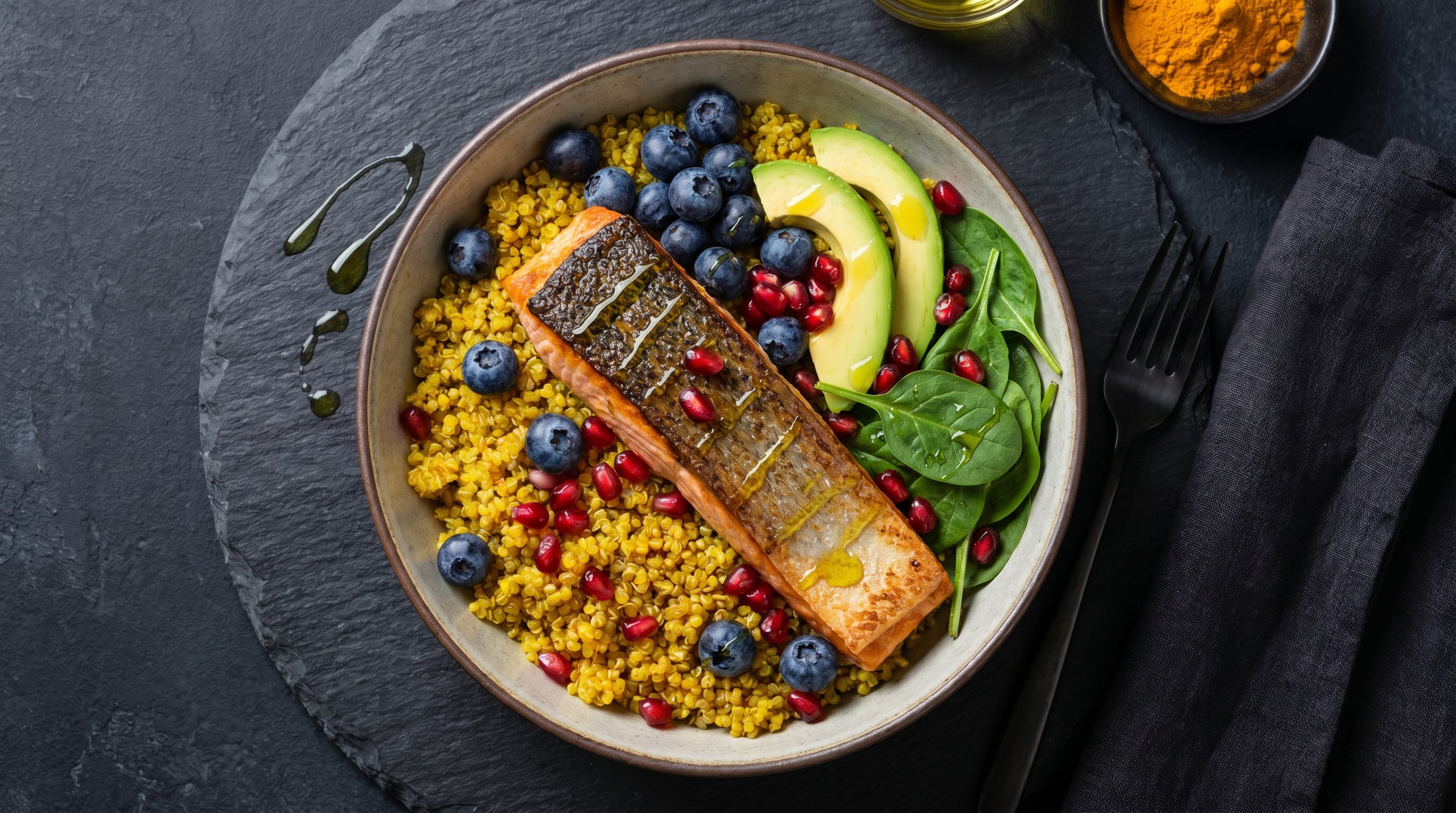
The best anti-inflammatory recipes are built on: fatty fish (omega-3s), extra virgin olive oil (oleocanthal), leafy greens (vitamin K + antioxidants), berries (anthocyanins), and legumes (fiber for anti-inflammatory gut bacteria). A diet built on these ingredients consistently reduces CRP and other inflammatory markers in clinical trials. The recipes below apply these principles to specific, practical meals scored for General Wellness.
15 Anti-Inflammatory Recipes, Scored
All scores are relative to the easyChef Pro General Wellness and Metabolic Health scoring system (A+ to F). Calorie and nutrition data from USDA FoodData Central.
| Recipe | Key anti-inflammatory ingredients | Wellness score | Protein | Calories |
|---|---|---|---|---|
| Baked salmon + roasted broccoli + olive oil | Salmon (EPA/DHA), olive oil (oleocanthal), broccoli (sulforaphane) | A+ | 38g | 480 |
| Lentil and spinach stew | Lentils (fiber/polyphenols), spinach (vitamin K), garlic (allicin) | A+ | 22g | 380 |
| Sardines on whole grain toast + tomato | Sardines (EPA/DHA), tomato (lycopene), whole grain (fiber) | A | 28g | 360 |
| Turmeric chicken bowl + brown rice + greens | Turmeric (curcumin), ginger, spinach, olive oil | A | 40g | 520 |
| Walnut and arugula salad + olive oil dressing + chickpeas | Walnuts (ALA omega-3), arugula (glucosinolates), olive oil, chickpeas | A | 18g | 410 |
| Blueberry Greek yogurt parfait + flaxseed | Blueberries (anthocyanins), flaxseed (ALA), Greek yogurt (probiotics) | A | 22g | 320 |
| Black bean and sweet potato stew | Black beans (fiber/anthocyanins), sweet potato (beta-carotene), garlic, cumin | A | 18g | 420 |
| Tuna and avocado salad + mixed greens | Tuna (EPA/DHA), avocado (oleic acid), spinach (lutein/zeaxanthin) | A | 32g | 390 |
| Mediterranean grain bowl + salmon + olives + tomato | Salmon, olive oil, olives (hydroxytyrosol), tomato, farro (fiber) | A | 36g | 550 |
| Roasted beet and walnut salad + goat cheese + arugula | Beets (betalains), walnuts (polyphenols), arugula | B+ | 14g | 350 |
| Green smoothie: spinach + kiwi + ginger + chia seeds | Spinach, kiwi (vitamin C), ginger (gingerols), chia (omega-3) | B+ | 12g | 280 |
| Turkey and kale soup + garlic + white beans | Kale (vitamin K/C), garlic (allicin), white beans (fiber), turkey | A | 34g | 450 |
| Mackerel with roasted asparagus + lemon + olive oil | Mackerel (omega-3), asparagus (prebiotic fiber), olive oil | A+ | 30g | 420 |
| Overnight oats with walnuts + berries + chia seeds | Oats (beta-glucan), walnuts, mixed berries (anthocyanins), chia | A | 16g | 380 |
| Chickpea and tomato curry + brown rice | Chickpeas (fiber/polyphenols), tomato (lycopene), turmeric, ginger | A | 20g | 490 |
Score any recipe for anti-inflammatory properties: Free Recipe Scorer. Paste any recipe URL to see the full General Wellness, Metabolic Health, and Performance score breakdown.
The Anti-Inflammatory Pantry: What to Keep Stocked
An anti-inflammatory kitchen runs on a different pantry than a standard one. These are the staples that make anti-inflammatory cooking fast and consistent.
Tier 1: Highest impact (use daily)
- Extra virgin olive oil - use as primary cooking fat; oleocanthal content degrades with heat above 375F, so keep for dressings and finishing
- Fatty fish (canned or fresh) - salmon, sardines, mackerel; 2-3 servings per week is the target
- Leafy greens - spinach, kale, arugula; add to anything
- Berries (fresh or frozen) - blueberries, strawberries, cherries; frozen is nutritionally identical to fresh
Tier 2: High impact (use several times per week)
- Walnuts and almonds - walnuts have the highest ALA omega-3 content of any nut
- Legumes - lentils, black beans, chickpeas; high-fiber feeds anti-inflammatory gut bacteria
- Cruciferous vegetables - broccoli, Brussels sprouts, cauliflower; sulforaphane reduces inflammatory markers
- Turmeric + black pepper - curcumin bioavailability increases 2000% when paired with piperine from black pepper
- Garlic and ginger - fresh is more potent than powdered; both show measurable effects on CRP
Related Reading
Frequently Asked Questions
- What are the best anti-inflammatory foods to eat daily?
- The foods with the strongest evidence for daily anti-inflammatory benefit: fatty fish (salmon, sardines, mackerel) for EPA and DHA omega-3s, extra virgin olive oil for oleocanthal (similar mechanism to ibuprofen at high doses), leafy green vegetables (spinach, kale, arugula) for vitamin K and antioxidants, berries for anthocyanins, nuts (especially walnuts and almonds) for polyphenols and healthy fat, and legumes (lentils, chickpeas, black beans) for fiber that feeds anti-inflammatory gut bacteria. These foods form the foundation of both the Mediterranean and MIND diets, both of which have the strongest anti-inflammatory evidence base among dietary patterns.
- What foods cause the most inflammation?
- The foods with the strongest evidence for driving systemic inflammation: refined carbohydrates and added sugars (drive insulin spikes and AGE production), trans fats (partially hydrogenated oils found in processed foods), excessive omega-6 oils (corn oil, soybean oil, safflower oil when used as primary cooking fats), ultra-processed foods with artificial additives, and excessive alcohol. Red meat in high quantities (more than 3-4 servings per week) is associated with increased inflammatory markers, though the mechanism is debated and likely relates to cooking method and overall diet context.
- Can an anti-inflammatory diet help with specific conditions?
- Yes. The evidence is strongest for: cardiovascular disease (reduces CRP and other inflammatory markers), type 2 diabetes (improves insulin sensitivity), rheumatoid arthritis (reduces disease activity markers and pain scores in multiple randomized trials), and depression (gut microbiome and inflammatory pathways are linked to mood regulation). The evidence is emerging but promising for: Alzheimer's disease (the MIND diet reduces risk), cancer prevention (certain cancers have inflammatory components), and general longevity. For any diagnosed condition, work with a physician alongside dietary changes.
- How does easyChef Pro score recipes for anti-inflammatory properties?
- easyChef Pro scores recipes across three health goals: General Wellness, Metabolic Health, and Performance. The General Wellness score incorporates NOVA processing level, micronutrient density, fiber content, and omega-3 to omega-6 ratio. Recipes built on the foods listed above (fatty fish, olive oil, leafy greens, legumes, berries) will consistently score high for General Wellness. You can use the Recipe Scorer to check any recipe before adding it to your rotation.
Score every recipe before it goes in your rotation
easyChef Pro scores any recipe for General Wellness, Metabolic Health, and Performance before you cook it. 7-day free trial, no credit card required.