I Scored It
Is Fried Rice Healthy? We Scored It.
Here is the full score breakdown and the swap that changes the number.
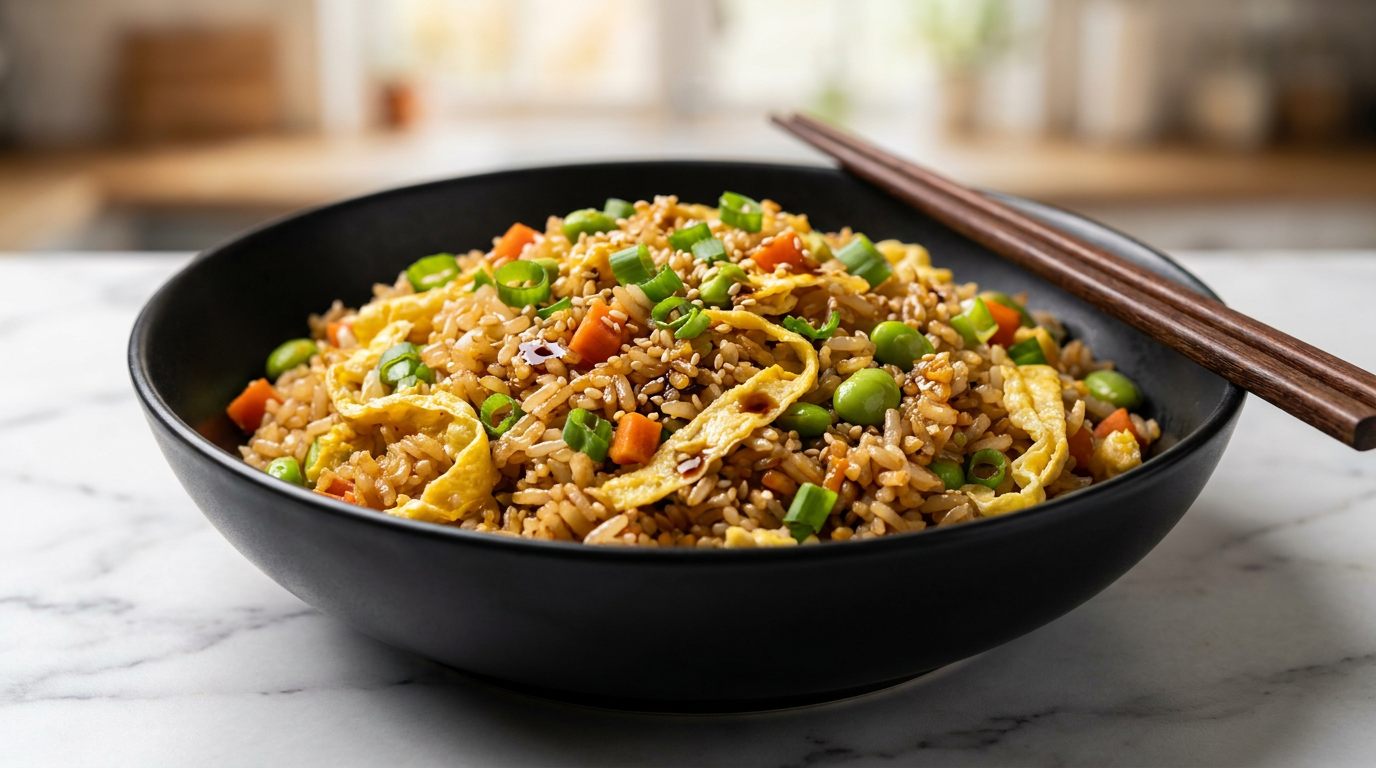
Short Answer
Traditional fried rice scored 44 out of 100 for general wellness goals using USDA-sourced nutrition data. The primary factors keeping the score low are high sodium (from soy sauce), a low fiber-to-carb ratio from white rice, and moderate fat from cooking oil. One targeted swap, brown rice instead of white plus low-sodium soy sauce, brings the score to 61.
Fried Rice Nutrition Score Breakdown
Traditional
44
out of 100
High sodium, white rice, minimal fiber
Improved
61
out of 100
Brown rice, low-sodium soy, extra veg
Core Scores (same traditional recipe):
| Core dimension | Score | Primary reason |
|---|---|---|
| Glycemic Impact | 34 | White rice is a high-glycemic base |
| Nutritional Density | 48 | Eggs and vegetables add micronutrient value |
| Energy Density | 46 | Moderate calorie density, reasonable satiety |
| NOVA Processing (1-4, lower = less processed) | 3 | Soy sauce processed but most ingredients are whole |
Focus Fit Scores (same traditional recipe):
| Health goal | Score | Primary reason |
|---|---|---|
| General Wellness | 44 | Balanced weighting across all factors |
| Heart Health | 32 | High sodium from soy sauce heavily penalised |
| Metabolic Health | 39 | Low fiber-to-carb ratio from white rice |
| Inflammatory Balance | 42 | Vegetables offset refined carb inflammation load |
| Digestive Health | 38 | Some fiber from vegetables, limited by white rice |
| Performance | 51 | Eggs provide adequate protein density |
Scored using easyChef Pro's deterministic nutrition engine. 800,000+ USDA-verified products. Same input = same score every time.
What Is Driving the Score
What is working
- Protein from eggs: whole eggs provide strong protein density and essential amino acids, contributing to the Performance and General Wellness scores.
- Vegetables: onion, peas, and any additional veg add fiber, vitamins, and micronutrients that offset some of the refined carb penalty.
- Moderate calorie density: compared to deep-fried dishes, stir-fried rice at normal oil levels keeps the calorie density manageable.
What is lowering the score
- Sodium from soy sauce: a standard serving of soy sauce contains 900 to 1,000mg of sodium. This is the primary reason the Heart Health score drops well below the General Wellness score.
- White rice and low fiber: white rice has very little fiber relative to its carbohydrate content, which pulls down the Metabolic score significantly.
- Cooking oil: the fat from stir-frying adds calories without nutritional offset. Sesame and vegetable oils are not harmful but they raise the calorie-to-nutrient ratio.
The Swap That Makes the Difference
Original
White rice + regular soy sauce
Swap
Brown rice + low-sodium soy sauce
Why it works: brown rice has significantly more fiber than white rice, directly raising the Metabolic score; low-sodium soy sauce cuts sodium by roughly 40 percent, lifting the Heart Health score.
Score impact: 44 to 61 (+17 points)
The swap does not change the dish. It changes what is driving the score.
The Improved Fried Rice Recipe
Ingredients
- 2 cups brown rice, cooked and cooled
- 3 large eggs
- 2 tbsp low-sodium soy sauce
- 1 tbsp sesame oil
- 1 tbsp vegetable oil
- 1 cup broccoli florets
- 1/2 cup frozen peas
- 3 green onions, sliced
- 2 garlic cloves, minced
Instructions
- Cook brown rice per package instructions. Spread on a sheet pan to cool.
- Heat vegetable oil in a large wok or skillet over high heat.
- Add garlic. Cook 30 seconds until fragrant.
- Add broccoli. Stir-fry 3 to 4 minutes until tender-crisp.
- Push vegetables to one side. Crack eggs into the empty space. Scramble 1 to 2 minutes.
- Add peas and cooled brown rice. Toss everything together over high heat.
- Add low-sodium soy sauce and sesame oil. Stir-fry 2 to 3 minutes until rice is lightly toasted.
- Top with sliced green onions. Serve immediately.
Your Fried Rice Might Score Differently
The scores above are for general wellness goals. If you are eating for heart health, blood sugar management, or performance, your fried rice score will be different because the factors that matter change.
The Heart Health score in particular is significantly lower than the General Wellness score, because of sodium. The Performance score is higher because eggs and any added protein raise that profile's key metrics.
Frequently Asked Questions
- Is fried rice healthy for weight loss?
- Fried rice scored 44 for general wellness. For weight management, the factors that matter most are calorie density and fiber-to-carb ratio. The traditional version is high in refined carbs and sodium with minimal fiber, making it calorie-dense without much nutritional offset. The improved version scores 61. Score your specific version free at easychefpro.com/tools/score.
- How many calories are in fried rice?
- A standard serving of takeout fried rice ranges from 350 to 550 calories depending on oil quantity, egg count, and add-ins. Calorie counts vary significantly by recipe and portion size. easyChef Pro scores nutrition holistically using 30+ factors across 800,000+ USDA-verified products.
- What makes fried rice unhealthy?
- The primary factors are high sodium (from soy sauce), a low fiber-to-carb ratio from white rice, and moderate fat from cooking oil. These three factors pull the score down for heart health and metabolic goals. Swapping to brown rice and low-sodium soy sauce addresses all three without changing the dish.
Score Your Version
Your fried rice, your ingredients, your goal. Free score in 30 seconds.