I Scored It
Is Mac and Cheese Healthy? We Scored It.
Here is the full score breakdown and the swap that changes the number.
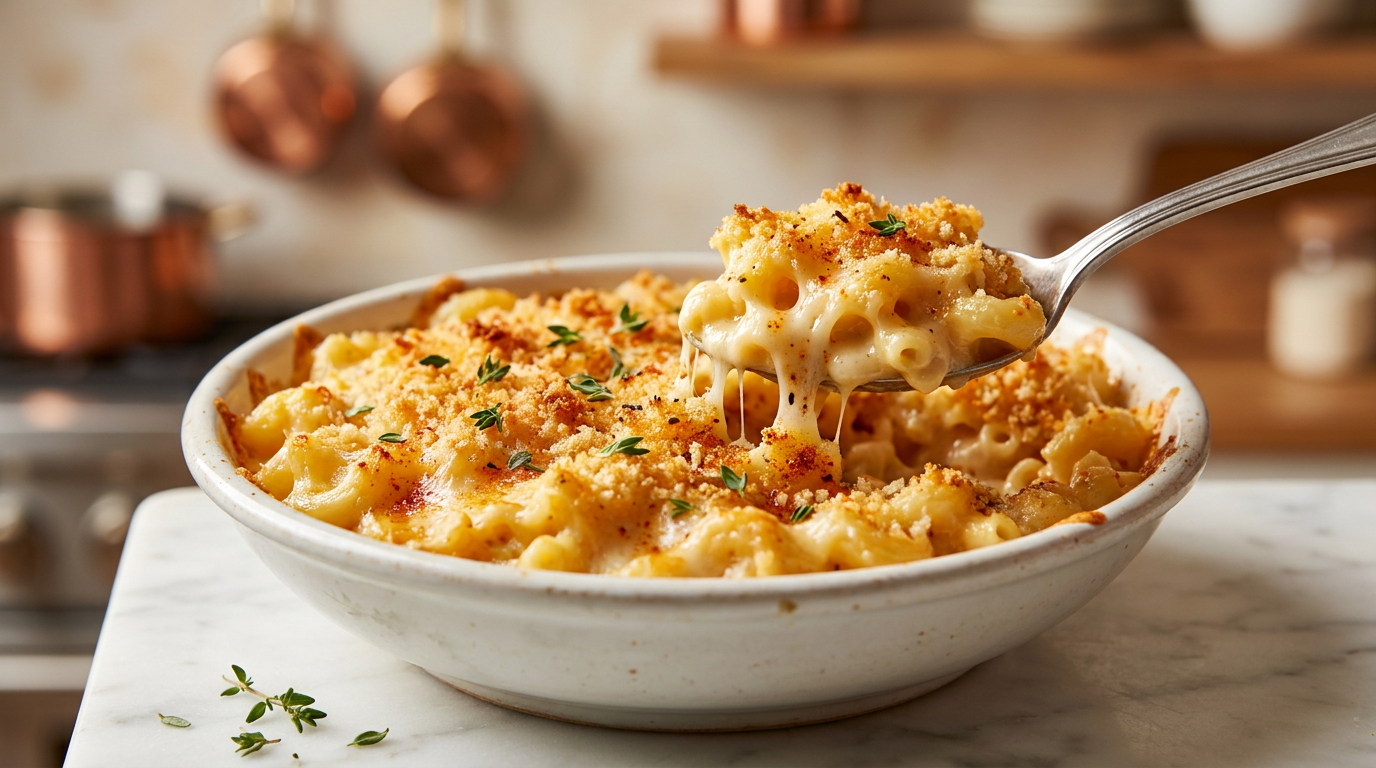
Short Answer
Traditional mac and cheese scored 38 out of 100 for general wellness goals using USDA-sourced nutrition data. The primary factors keeping the score low are high sodium, saturated fat from butter and cheese, and a very low fiber-to-carb ratio from white pasta. One targeted swap, whole wheat pasta plus sharp cheddar and broccoli, brings the score to 57.
Mac and Cheese Nutrition Score Breakdown
Traditional
38
out of 100
High sodium, saturated fat, no fiber
Improved
57
out of 100
Whole wheat pasta, sharp cheddar, broccoli
Core Scores (same traditional recipe):
| Core dimension | Score | Primary reason |
|---|---|---|
| Glycemic Impact | 29 | White pasta causes a sharp blood sugar spike |
| Nutritional Density | 31 | Low micronutrient content relative to calories |
| Energy Density | 32 | Calorie-dense with little fiber to offset fullness |
| NOVA Processing (1-4, lower = less processed) | 4 | Processed cheese is ultra-processed |
Focus Fit Scores (same traditional recipe):
| Health goal | Score | Primary reason |
|---|---|---|
| General Wellness | 38 | Balanced weighting across all factors |
| Heart Health | 26 | High sodium and saturated fat heavily penalised |
| Blood Sugar | 33 | Very low fiber-to-carb ratio from white pasta |
| Inflammation Control | 28 | Refined carbs and processed dairy are pro-inflammatory |
| Digestive and Gut | 24 | Near-zero fiber, highly processed ingredients |
| Muscle and Performance | 44 | Some protein from cheese, limited by fat content |
Scored using easyChef Pro's deterministic nutrition engine. 800,000+ USDA-verified products. Same input = same score every time.
What Is Driving the Score
What is working
- Calcium from cheese: cheese is a strong source of calcium, contributing positively to the micronutrient component of the score.
- Protein from cheese and pasta: combined, they provide a moderate protein contribution that helps the Performance score relative to the other goals.
- Accessible energy: mac and cheese delivers consistent carbohydrate energy, which contributes to the Performance profile.
What is lowering the score
- Sodium from processed cheese or box mix: box mac and cheese in particular is extremely high in sodium. This is the primary reason the Heart Health score drops to 26.
- Saturated fat from butter and cheese: the combination of butter in the roux and full-fat cheese creates a high saturated fat load that heavily penalises the Heart Health profile.
- No fiber from white pasta: white pasta has almost zero fiber relative to its carbohydrate content. This is the biggest driver of the low Metabolic score.
The Swap That Makes the Difference
Original
White pasta + processed cheese sauce
Swap
Whole wheat pasta + sharp cheddar + broccoli
Why it works: whole wheat pasta has significantly more fiber than white, directly raising the Metabolic score; sharp cheddar has more flavor per gram so you use less, cutting sodium and saturated fat; broccoli adds fiber, vitamins, and volume without meaningful calories.
Score impact: 38 to 57 (+19 points)
The swap does not change the dish. It changes what is driving the score.
The Improved Mac and Cheese Recipe
Ingredients
- 12 oz whole wheat elbow pasta
- 1.5 cups sharp cheddar, freshly grated
- 1 cup low-fat milk
- 2 tbsp butter
- 2 tbsp all-purpose flour
- 2 cups broccoli florets, steamed
- 1/4 tsp garlic powder
- 1/4 tsp mustard powder
- 1/4 tsp black pepper
Instructions
- Cook whole wheat pasta per package instructions. Reserve 1/4 cup pasta water. Drain.
- Steam broccoli florets 3 to 4 minutes until tender. Set aside.
- Melt butter in a saucepan over medium heat. Whisk in flour. Cook 1 minute.
- Gradually whisk in milk. Cook 3 to 4 minutes until thickened, stirring constantly.
- Remove from heat. Stir in sharp cheddar, garlic powder, mustard powder, and pepper until smooth.
- Add drained pasta and broccoli. Toss to coat. Add a splash of pasta water if sauce is too thick.
- Serve immediately.
Your Mac and Cheese Might Score Differently
The scores above are for general wellness goals. If you are eating for heart health, blood sugar management, or performance, your mac and cheese score will be different because the factors that matter change.
The Heart Health score in particular is significantly lower than the General Wellness score because of sodium and saturated fat. Box mac and cheese scores even lower than homemade due to the high sodium in the powdered cheese mix.
Frequently Asked Questions
- Is mac and cheese healthy for weight loss?
- Mac and cheese scored 38 for general wellness. For weight management, the key factors are calorie density and fiber-to-carb ratio. Traditional mac and cheese is high in refined carbs and saturated fat with almost no fiber, making it calorie-dense without much nutritional offset. The improved version scores 57. Score your specific version free at easychefpro.com/tools/score.
- How many calories are in mac and cheese?
- A standard serving of homemade mac and cheese ranges from 400 to 600 calories depending on pasta quantity, cheese type, and butter amount. Box mac and cheese (one serving of a standard box) is typically 250 to 350 calories but contains very high sodium. easyChef Pro scores nutrition holistically using 30+ factors across 800,000+ USDA-verified products.
- What makes mac and cheese unhealthy?
- The primary factors are high sodium (especially in processed box versions), high saturated fat from butter and cheese, and a very low fiber-to-carb ratio from white pasta. These three factors pull the score down significantly for heart health and metabolic goals. Swapping to whole wheat pasta and sharp cheddar addresses all three without losing the dish.
Score Your Version
Your mac and cheese, your ingredients, your goal. Free score in 30 seconds.