I Scored It
Is Protein Pasta Actually High Protein? We Scored It.
Chickpea, lentil, edamame, and black bean pasta all claim to be "high protein." Here is what the USDA data actually shows: real protein counts, fiber, net carbs, NOVA scores, and whether it changes anything about your meal.
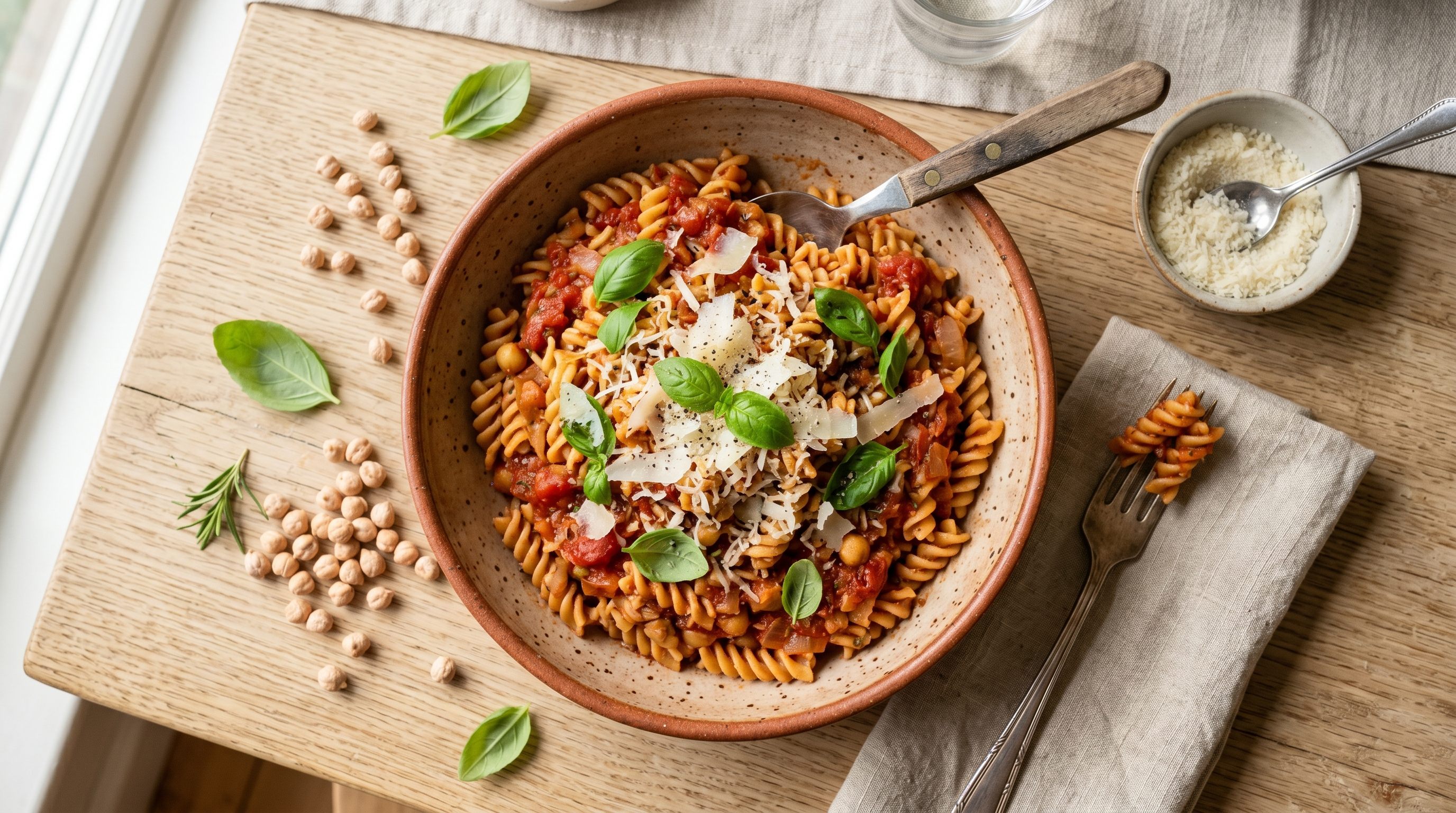
Short Answer
Yes, protein pasta is meaningfully higher in protein than regular pasta. Chickpea pasta delivers 14g per 2oz dry serving vs. 7g for regular pasta. Lentil pasta is similar. Edamame and black bean pasta go higher (24-25g) but have a stronger flavor. The protein is incomplete (legumes are low in methionine), so protein pasta works best alongside a complete protein source rather than as the sole protein in a meal. For blood sugar and carb management, the lower glycemic impact is a meaningful advantage over regular pasta.
The Full Comparison: Protein Pasta vs. Regular Pasta
All values per 2oz dry serving (approximately 1 cup cooked), from USDA FoodData Central and published product nutrition labels.
| Pasta type | Protein | Net carbs | Fiber | Calories | NOVA |
|---|---|---|---|---|---|
| Regular wheat pasta (enriched) | 7g | 40g | 2g | 200 | 1-2 |
| Whole wheat pasta | 8g | 38g | 5g | 198 | 1 |
| Chickpea pasta (Banza-style) | 14g | 32g | 8g | 190 | 1 |
| Red lentil pasta | 14g | 33g | 7g | 190 | 1 |
| Green lentil pasta | 14g | 33g | 7g | 190 | 1 |
| Edamame pasta | 24g | 17g | 13g | 200 | 1 |
| Black bean pasta | 25g | 18g | 12g | 200 | 1 |
| Brown rice pasta | 4g | 43g | 1g | 210 | 1 |
| Gluten-free corn pasta | 4g | 45g | 1g | 210 | 1-2 |
NOVA score for most pasta is NOVA 1 (minimal processing). Fortified pasta with added vitamins may be NOVA 2. Commercial pasta sauces are often NOVA 3-4, which is what typically raises the NOVA rating of a pasta dish, not the pasta itself.
What "High Protein" Actually Means for Pasta
Chickpea and lentil pasta double the protein of regular pasta. That is real. But context matters. A 2oz serving of chickpea pasta at 14g protein still needs a protein anchor if you are aiming for 30g at a meal. Add a 4oz chicken breast (31g) and you have a 45g protein meal from pasta plus protein. Compare that to regular pasta with the same chicken: 38g protein. The pasta swap added 7g, which is meaningful but not transformational on its own.
Where protein pasta changes things more significantly is for plant-based eaters who cannot add chicken. A bowl of chickpea pasta with a cup of edamame and a tablespoon of tahini dressing provides 35g of protein without any animal products. Regular pasta in that same setup delivers only 28g.
Score any pasta recipe with the exact pasta you use: Free Recipe Scorer, paste a recipe URL or enter ingredients to see the full protein and health goal breakdown.
Taste and Texture: What to Expect
Protein pasta varies significantly in taste depending on the base ingredient. This matters because the best pasta is the one you will actually eat consistently.
- Chickpea pasta: Closest to regular pasta in taste and texture. Slightly nuttier. Holds up well to tomato sauce. The most versatile option.
- Red lentil pasta: Mild flavor, softer texture. Can get mushy if overcooked. Best with chunky sauces that provide structure.
- Edamame pasta: Firmer texture, more pronounced flavor. Works well in Asian-style dishes with sesame or ginger dressings. Less natural in Italian preparations.
- Black bean pasta: Strong flavor, dark color, firm bite. Best in Mexican-style preparations. Can be polarizing in traditional pasta dishes.
For most people replacing regular pasta in familiar dishes, chickpea pasta is the most seamless swap. Red lentil pasta is a close second. Edamame and black bean pasta work better when you change the sauce and seasoning to match the ingredient, rather than trying to make it taste like a wheat pasta dish.
How the Scores Change When You Swap Pasta
A standard pasta with tomato sauce recipe scores differently across health goals when you change the pasta type. Example: spaghetti with marinara, olive oil, and garlic.
| Pasta used | General Wellness | Metabolic Health | Performance |
|---|---|---|---|
| Regular wheat pasta | 54 | 46 | 42 |
| Whole wheat pasta | 60 | 55 | 46 |
| Chickpea pasta | 68 | 66 | 58 |
| Lentil pasta | 67 | 64 | 57 |
| Edamame pasta | 72 | 71 | 72 |
The score improvement is consistent across all health goals. Metabolic Health and Performance see the biggest gains because of the lower glycemic impact and higher protein. You can test this with your own recipes using the easyChef Pro Recipe Scorer.
Related Reading
Frequently Asked Questions
- Is protein pasta actually better for you than regular pasta?
- Protein pasta (chickpea, lentil, edamame-based) contains roughly 14-16g of protein per 2oz dry serving compared to 7-8g in regular wheat pasta. It also has more fiber (6-8g vs 2-3g) and a lower glycemic impact. However, the protein in legume-based pasta is incomplete (lower in methionine) compared to animal proteins. Protein pasta is better than regular pasta nutritionally, but it is not a substitute for a protein source like chicken or eggs. It is best used as part of a higher-protein meal rather than the sole protein component.
- Which protein pasta has the most protein?
- Per 2oz dry serving, the highest protein options are: edamame pasta (24g), black bean pasta (25g), and lentil pasta (14g). Chickpea pasta (like Banza) provides 14g per serving. Most wheat-based enriched or whole grain pastas provide 7-8g. The tradeoff is that black bean and edamame pastas have a stronger flavor and different texture that some people find harder to use in traditional pasta dishes.
- Does protein pasta have fewer carbs than regular pasta?
- Yes. Chickpea pasta contains roughly 32g of net carbs per 2oz dry serving vs. 40g for regular pasta. Lentil pasta is similar. Black bean and edamame pasta are lower still at 17-20g of net carbs per serving. The fiber content is also higher, which lowers the glycemic impact beyond what the total carb count shows. For people managing blood sugar, protein pasta is a meaningful improvement over regular pasta.
- How does easyChef Pro score protein pasta vs. regular pasta?
- easyChef Pro scores the same recipe using chickpea pasta vs. regular pasta consistently higher on the Performance, Metabolic Health, and General Wellness health goals. The protein and fiber difference accounts for the score gap. The NOVA score is also typically lower for minimally processed legume pasta (NOVA 1-2) compared to some commercial fortified wheat pastas. You can import any recipe and swap the pasta type to see the exact score difference.
Score your pasta recipes with any pasta type
See exactly how swapping pasta changes your protein count, blood sugar score, and overall nutrition rating. Paste any recipe URL and get the full breakdown free.