Mediterranean Diet
Mediterranean Diet Food List: What to Eat and Avoid
The complete Mediterranean diet food list organized by frequency: eat daily, eat several times a week, eat occasionally, and minimize. Scored for General Wellness with practical shopping context for each category.
Short Answer
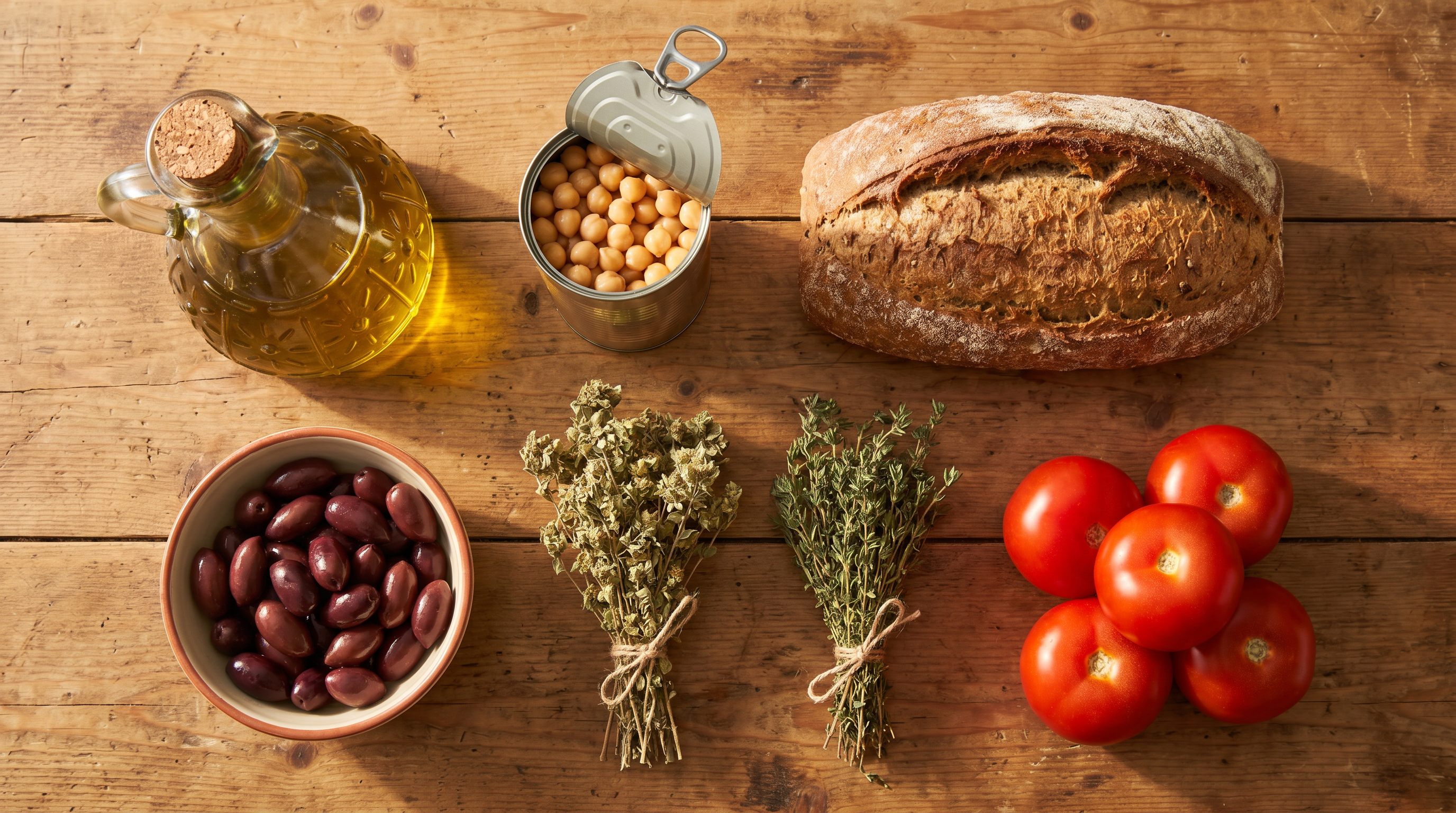
The Mediterranean diet is not a list of forbidden foods. It is a structure: eat vegetables and legumes at every meal, use olive oil as your primary fat, eat fish 2-3 times per week, eat whole grains in moderate portions, use fruit as dessert, limit red meat to occasional, and minimize ultra-processed food. The proportion and frequency matter more than any individual food.
Mediterranean Diet Food List by Frequency
Eat Daily
| Food | Examples | Why daily | Wellness score |
|---|---|---|---|
| Vegetables | Spinach, kale, tomatoes, broccoli, peppers, zucchini, eggplant | Micronutrient density, fiber, anti-inflammatory polyphenols | A+ |
| Extra virgin olive oil | EVOO for cooking, dressing, finishing | Oleocanthal, oleic acid, polyphenols; primary fat source | A+ |
| Legumes | Chickpeas, lentils, white beans, black beans, fava | Protein, fiber, resistant starch; daily in traditional Mediterranean areas | A+ |
| Whole grains (moderate) | Whole wheat bread, farro, barley, brown rice, bulgur | Fiber, B vitamins; modest portions (1/2-1 cup cooked) | A |
| Fruit | Berries, citrus, figs, pomegranate, melon, grapes | Polyphenols, fiber, vitamins; replace refined sugar | A |
| Nuts and seeds | Walnuts, almonds, pine nuts, sesame, flaxseed | Healthy fat, protein, fiber; small portions (1 oz) | A |
| Fresh herbs and spices | Garlic, oregano, basil, rosemary, thyme, cumin, coriander | Concentrated polyphenols; flavor without salt or processed additions | A+ |
Eat Several Times Per Week
| Food | Examples | Target frequency |
|---|---|---|
| Fish and seafood | Salmon, sardines, mackerel, tuna, anchovies, shrimp, mussels | 2-3 times per week; fatty fish (salmon, sardines, mackerel) for maximum EPA/DHA |
| Eggs | Any preparation | 3-4 per week; daily is acceptable in most current Mediterranean diet guidelines |
| Plain yogurt and cheese | Greek yogurt, feta, parmesan, ricotta, halloumi | Moderate portions daily or several times weekly; primarily fermented dairy |
| Poultry | Chicken, turkey | Once or twice per week in moderate portions |
Eat Occasionally (Few Times Per Month)
- Red meat: lamb, beef, pork -- small portions (3-4oz), prepared simply, not processed
- Sweets and pastries: only for special occasions
- White bread and refined grains: not daily staples
Minimize or Eliminate
- Processed meats: deli meats, hot dogs, sausage, bacon
- Refined carbohydrates: white bread (as a staple), regular pasta (as a staple), pastries
- Sugary beverages: soda, juice, sweetened coffee drinks
- Ultra-processed packaged foods: chips, cookies, fast food, frozen processed meals
- Margarine and vegetable oils high in omega-6: corn oil, soybean oil as primary cooking fat
Related Reading
Frequently Asked Questions
- What foods are included in the Mediterranean diet?
- The Mediterranean diet food list centers on: vegetables (daily, at every meal), legumes (lentils, chickpeas, white beans -- several times per week), whole grains (whole wheat bread, farro, brown rice, barley -- in moderate portions), fish and seafood (2-3 times per week), extra virgin olive oil (primary fat for cooking and dressing), nuts and seeds (daily as snacks), fruit (primary dessert), plain yogurt and cheese (moderate dairy), eggs (several times per week), and fresh herbs and spices. Poultry is moderate (once or twice weekly). Red meat is rare (a few times per month). Processed foods and refined sugars are minimal.
- What foods are not allowed on the Mediterranean diet?
- The Mediterranean diet does not have absolute prohibitions, but it minimizes: refined grains (white bread, white rice, regular pasta), added sugars (pastries, candy, sugar-sweetened beverages), processed meats (deli meats, hot dogs, sausage), ultra-processed packaged snacks (chips, cookies, fast food), butter and margarine as primary fats, and excessive red meat (more than a few times per month). The distinction is about frequency and proportion, not complete elimination.
- Is the Mediterranean diet expensive to follow?
- The Mediterranean diet can be very affordable if centered on its cheapest components: canned legumes (chickpeas, white beans, lentils), canned sardines and tuna, frozen vegetables, in-season produce, and dried whole grains. The expensive perception comes from treating fish as expensive (whole fresh fish is not cheap, but canned sardines and frozen shrimp are), and olive oil (a $15 bottle lasts 4-6 weeks as a primary cooking fat). The legume-heavy base of the diet is among the most affordable protein sources available.
- How does easyChef Pro score Mediterranean diet foods?
- easyChef Pro assigns General Wellness scores to recipes. The scoring system rewards: high micronutrient density, low NOVA processing level (whole and minimally processed foods), omega-3 content, fiber content, and favorable omega-6/omega-3 ratio. Mediterranean staples -- olive oil, fatty fish, legumes, leafy greens -- all score A and A+ for General Wellness. The Recipe Scorer can check any Mediterranean recipe before you add it to your rotation.
Build a full Mediterranean meal plan automatically
easyChef Pro scores every meal for General Wellness and builds a week plan optimized for whole food, Mediterranean-style eating. 7-day free trial, no credit card required.