Free Calorie Deficit Calculator
How big a calorie deficit do you need?
Your calorie deficit is how far below your maintenance calories you eat to lose weight. Enter your details and get your exact daily calorie target to lose weight, at the pace you choose. Calculated from your own numbers, not a generic 1,500. Free, no account. Takes 30 seconds.
Your details
Watch: 15 seconds
The deficit, in plain numbers.
Inside easyChef Pro
A deficit is easy to calculate. Hard to hit. The app makes it automatic.
The target you just calculated becomes the baseline easyChef Pro uses to score every recipe, plan every week, and build every grocery list. Every meal is measured against your calorie and macro targets in real time, so the deficit happens without you counting.
Calculators Built In
TDEE, daily reference intakes (DRI), macros, and protein, all inside the app and recalculated as your weight, activity, and goals change. Based on the Mifflin-St Jeor equation, USDA 2025-2030 guidelines, and NIH reference intakes. Set your deficit once and every meal is measured against it.
Recalculated as you changeParameters Per Recipe Score
Every recipe scored at the ingredient level using USDA-referenced nutrient data. Calories, protein, net carbs, fiber, fat, glycemic impact, processing level, and more, calculated from real data, not estimates. So you can see if a meal fits your deficit before you cook it.
Deterministic, not probabilisticSwap That Moves the Score Most
Every scored recipe shows the one ingredient swap that most improves it for your goal. In a deficit, it shows the swap that cuts the most calories or net carbs while keeping protein high, so a meal that was over your target comes back under it with a single change.
One swap. Every recipe.A 500-calorie deficit selected
Set your deficit and the whole system recalibrates around it.
Say your maintenance is 2,200 and you choose to lose 1 pound a week. Your daily target drops to 1,700. Every recipe in your meal plan filters to meals that fit, your grocery list rebuilds around them, and your health scores recalculate with calorie density weighted higher. You set one number. The system reconfigured everything else.
Inside easyChef Pro
See exactly how a recipe fits your deficit.
Paste any recipe link. Get a 0-100 score with the full breakdown at the ingredient level: calories, protein, carbs, fat, and fiber against your target. Free. No account required.
Traffic light breakdown
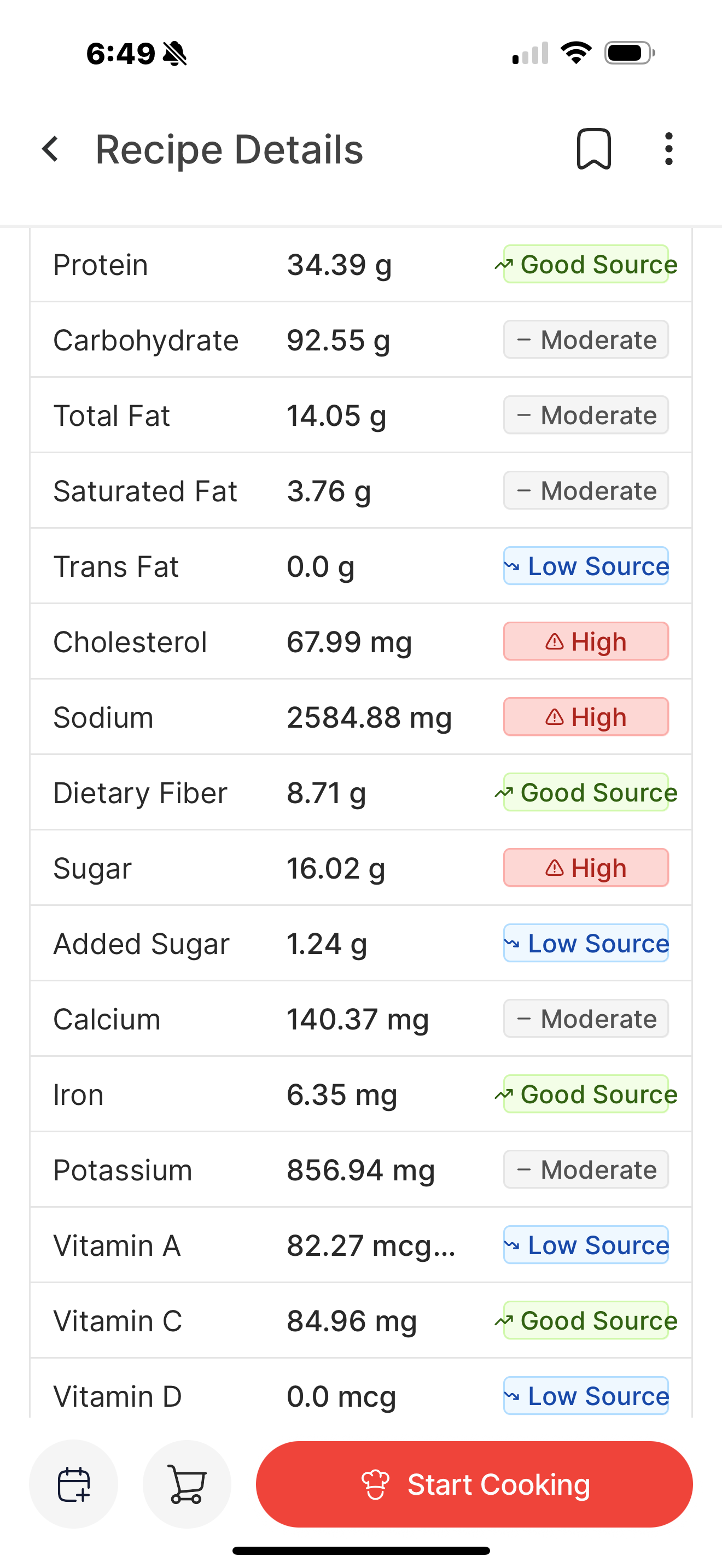
Calories and every macro labeled green, yellow, or red against your daily target.
Core nutrition scores
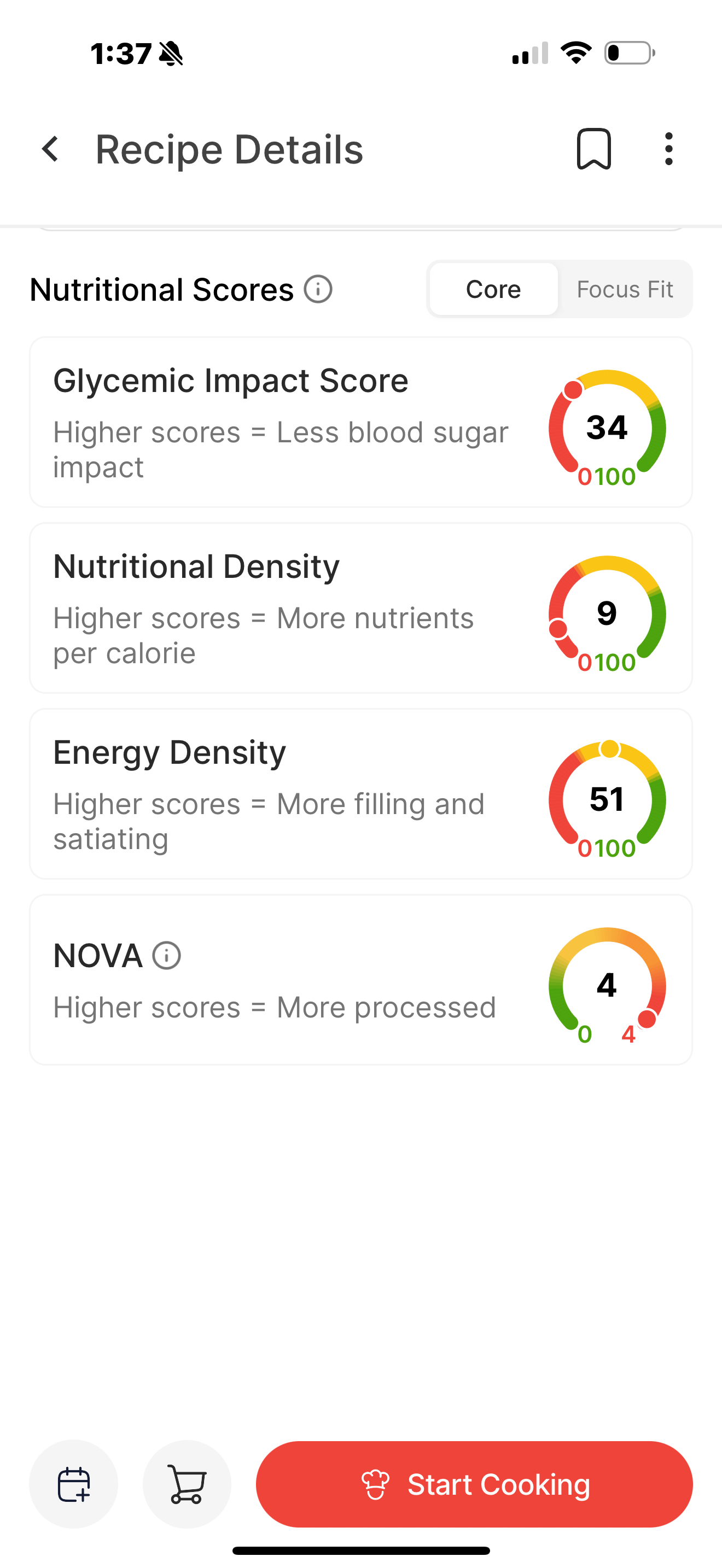
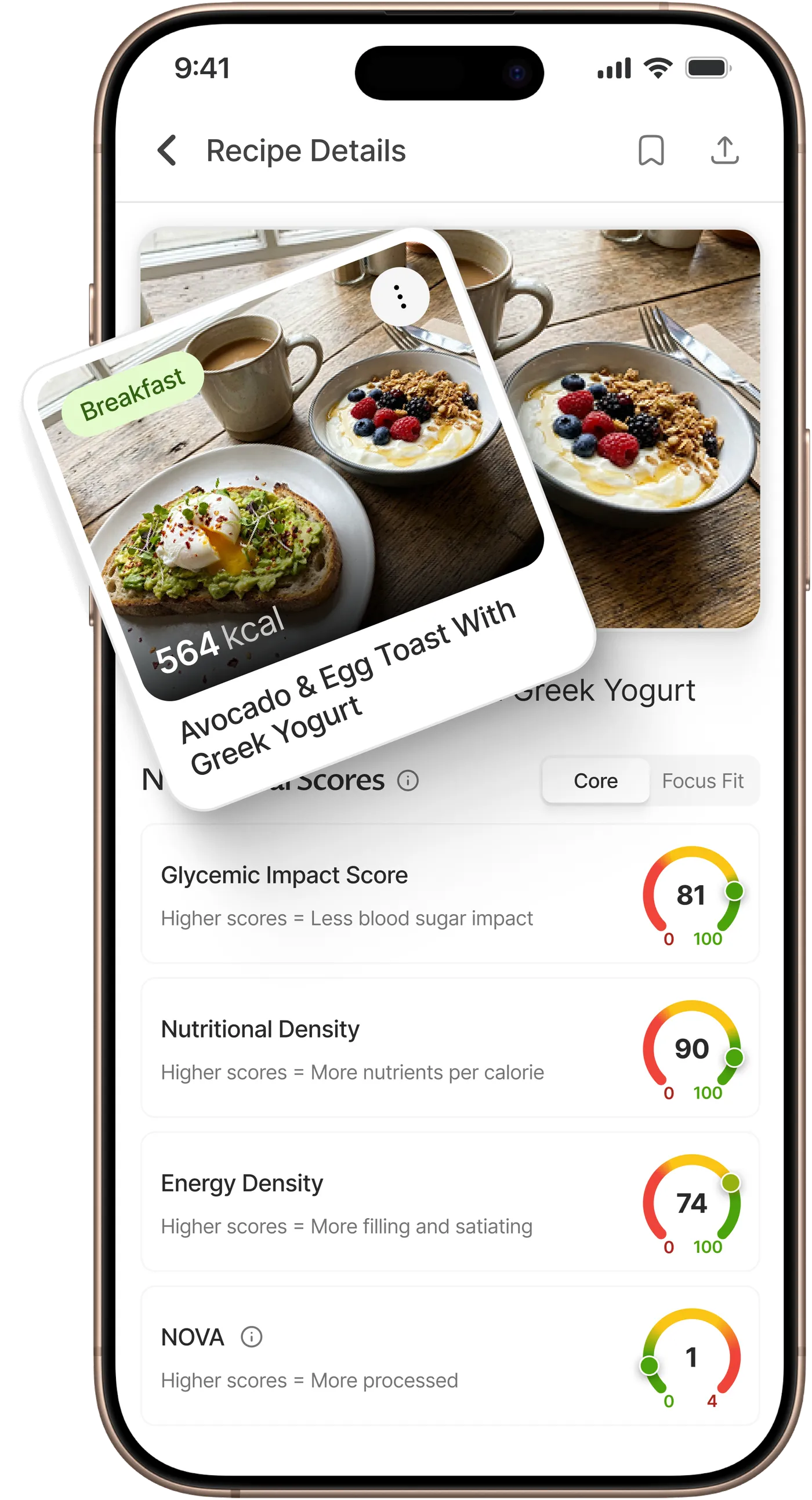
Glycemic impact, nutrient density, energy density, and NOVA processing. Four scores in one view.
Focus Fit scores
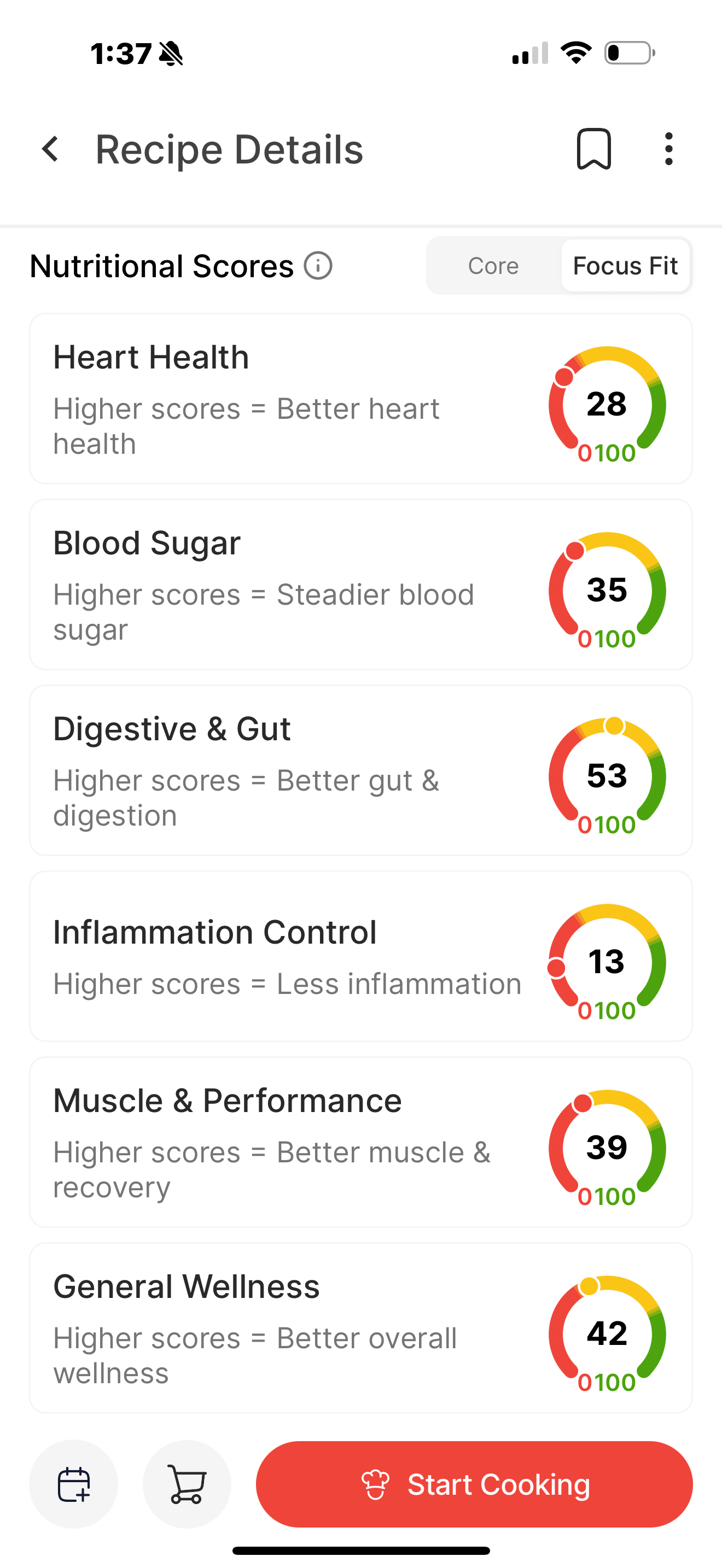
Six health dimensions. A weight-loss goal changes how every recipe scores against your deficit.
Recipe calorie breakdown
See exactly how a recipe fits your deficit.Before you shop. Before you cook.
Paste any recipe URL into the easyChef Pro scorer. Get the full breakdown: calories, protein, carbs, fat, and fiber per serving. Calculated at the ingredient level from USDA-referenced data. Not an estimate. The actual number.
If your target is 1,700 calories and one dinner uses 950, you know before you commit. The scorer tells you the one swap that brings it down most, usually a single ingredient change.

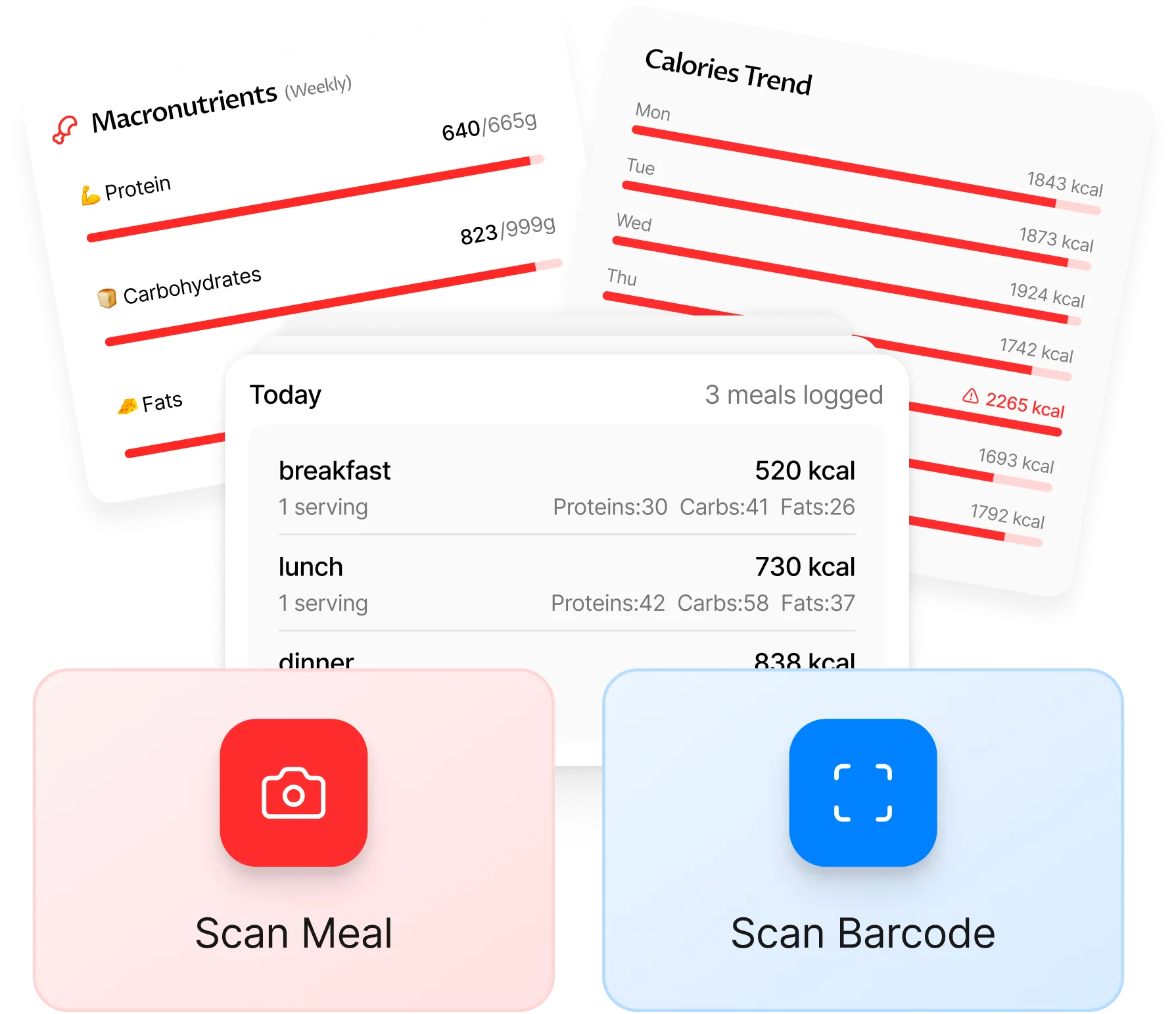
Automatic calorie tracking
Track every calorie. Stay in your deficit.Without logging a single thing manually.
Every recipe you cook in easyChef Pro logs to your nutrition history automatically. Track daily calories against your deficit target, see weekly trends, and see exactly which meals are keeping you on track and which are pulling you off, without entering anything by hand.
Goal-specific scoring
A weight-loss goal changes how every recipe scores.Not just filtered. Fundamentally recalculated.
Set your goal to lose and the scoring matrix recalibrates. A cutting goal weights calorie density and protein-to-calorie ratio higher, so the recipes that rise to the top are the ones that keep you full and in your deficit. Your target sets the calories; your goal sets what healthy means for you.
What is a calorie deficit?
A calorie deficit is eating fewer calories than your body burns. The number your body burns in a day is your TDEE (maintenance calories). When you eat below it, your body makes up the gap by burning stored fat, and you lose weight. The deficit is simply that gap: burn 2,200, eat 1,700, and you are in a 500-calorie deficit.
How to calculate your calorie deficit
Two steps. First find your maintenance calories: your BMR from the Mifflin-St Jeor formula (weight, height, age, sex), multiplied by an activity factor from 1.2 to 1.9. Then subtract your deficit: 250 calories a day for about half a pound of loss per week, 500 for about a pound. The calculator above does both and gives you the daily calorie target to eat at each rate.
What should your calorie deficit be?
For most people, 250 to 500 calories per day is the sweet spot: fast enough to see the scale move, moderate enough to protect muscle and stay consistent. A 500-calorie deficit is roughly 1 pound per week. Bigger deficits (750+) lose faster but get harder to sustain and risk muscle loss and fatigue. Never drop below 1,200 calories a day without medical supervision, which is why the calculator floors every target there.
Can you build muscle in a calorie deficit?
Yes, particularly if you are new to lifting, returning after time off, or carrying higher body fat. It is called body recomposition, and it needs two things: high protein (about 0.7 to 1 gram per pound of body weight) and progressive resistance training. Keep the deficit moderate so you have the energy to train and the protein to recover. The full breakdown above gives you your protein target at your deficit.
Why you might not be losing weight in a deficit
Almost always, the deficit is smaller than it looks. Untracked bites, oils, drinks, and weekend meals close the gap, and most people underestimate intake by 20 to 40 percent. Water retention can also hide fat loss for a week or two. The fix is accurate tracking against a real target. easyChef Pro helps here: instead of estimating what is on your plate, it calculates every meal from USDA-referenced data, so the calories you track against your deficit are real, not guessed.
More free tools and reading
Frequently asked questions
What is a calorie deficit?
A calorie deficit is when you eat fewer calories than your body burns in a day. Your body then makes up the difference by using stored energy, mostly body fat, which is how you lose weight. The size of the gap between what you burn (your TDEE) and what you eat is the size of your deficit. A deficit of about 500 calories per day equals roughly 1 pound of fat loss per week.
What does calorie deficit mean?
Calorie deficit means eating below your maintenance calories. Maintenance (your TDEE) is what keeps your weight stable; anything under that is a deficit. It does not mean starving or eating as little as possible. The most sustainable deficit is a moderate one, around 250 to 500 calories per day, which the calculator above sets for you based on your own numbers.
What should my calorie deficit be?
For most people a deficit of 250 to 500 calories per day is the sweet spot: fast enough to see progress, slow enough to keep muscle and stay consistent. A 500-calorie deficit is about 1 pound of loss per week; 250 is about half a pound. Larger deficits (750 or more) lose faster but are harder to sustain and risk muscle loss. The calculator floors any target at 1,200 calories per day for safety.
How much of a calorie deficit do I need to lose weight?
One pound of body fat is about 3,500 calories, so a 500-calorie daily deficit (3,500 per week) loses roughly 1 pound per week, and a 250-calorie deficit loses about half a pound. Enter your details above and the calculator shows your exact daily calorie target for each rate of loss, calculated from your maintenance calories rather than a generic number.
Why am I not losing weight in a calorie deficit?
The most common reason is that the deficit is not as big as you think. Untracked bites, drinks, cooking oils, and weekend meals add up fast, and most people underestimate what they eat by 20 to 40 percent. Water retention can also mask fat loss for one to two weeks. The fix is to track accurately against a real target: if the scale has not moved in two to three weeks, tighten your tracking or drop another 100 to 200 calories.
Can you build muscle in a calorie deficit?
Yes, especially if you are new to lifting, returning after a break, or carrying higher body fat. This is called body recomposition. It requires two things: enough protein (roughly 0.7 to 1 gram per pound of body weight) and progressive resistance training. Keep the deficit moderate, not aggressive, so you have the energy to train hard and the protein to repair muscle. The full breakdown below gives you your protein target.
How does a calorie deficit work?
Your body needs a certain number of calories to fuel everything it does in a day, from breathing to walking to digesting food. That total is your TDEE. When you eat less than that, your body covers the shortfall by burning stored fat for energy, and you lose weight. Eat at your TDEE and weight holds; eat above it and you gain. A calorie deficit simply sets your daily intake below your burn on purpose.