The 9 Patented Modules of

Health Operating System

easyChef Pro is more than a single feature; it is a complete, integrated ecosystem Powered by Digital Nutrition Intelligence™. Each of the 9 modules below is a patented, deterministic engine designed to solve a specific piece of the nutritional puzzle. Explore the science behind the system.

1. DNI™ (Digital Nutrition Intelligence™ — Orchestration Layer)

The Intelligence Fabric

Central orchestration layer coordinating timing, data flow, and synchronization across all ecosystem modules. Ensures deterministic operation, manages dependency graphs, maintains audit trails, and enforces the reproducibility guarantee across the entire platform.
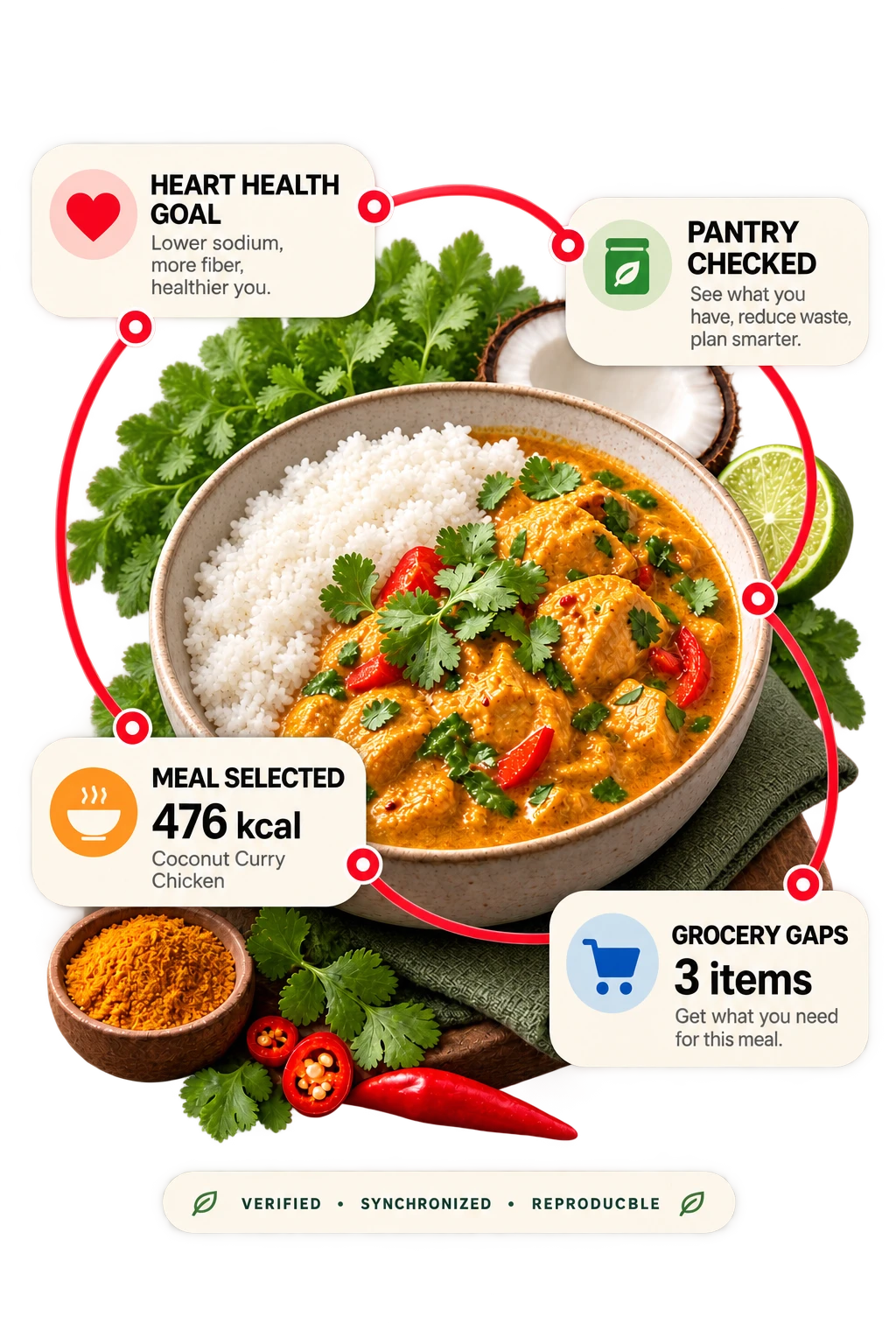
A Coconut Curry Chicken bowl ringed by four linked cards -- Heart Health Goal (lower sodium, more fiber), Pantry Checked, Meal Selected 476 kcal, and Grocery Gaps 3 items -- above a Verified, Synchronized, Reproducible strip.

2. DNE (Deterministic Nutrition Engine — Scoring Foundation)

Consistent Nutritions Mechanism

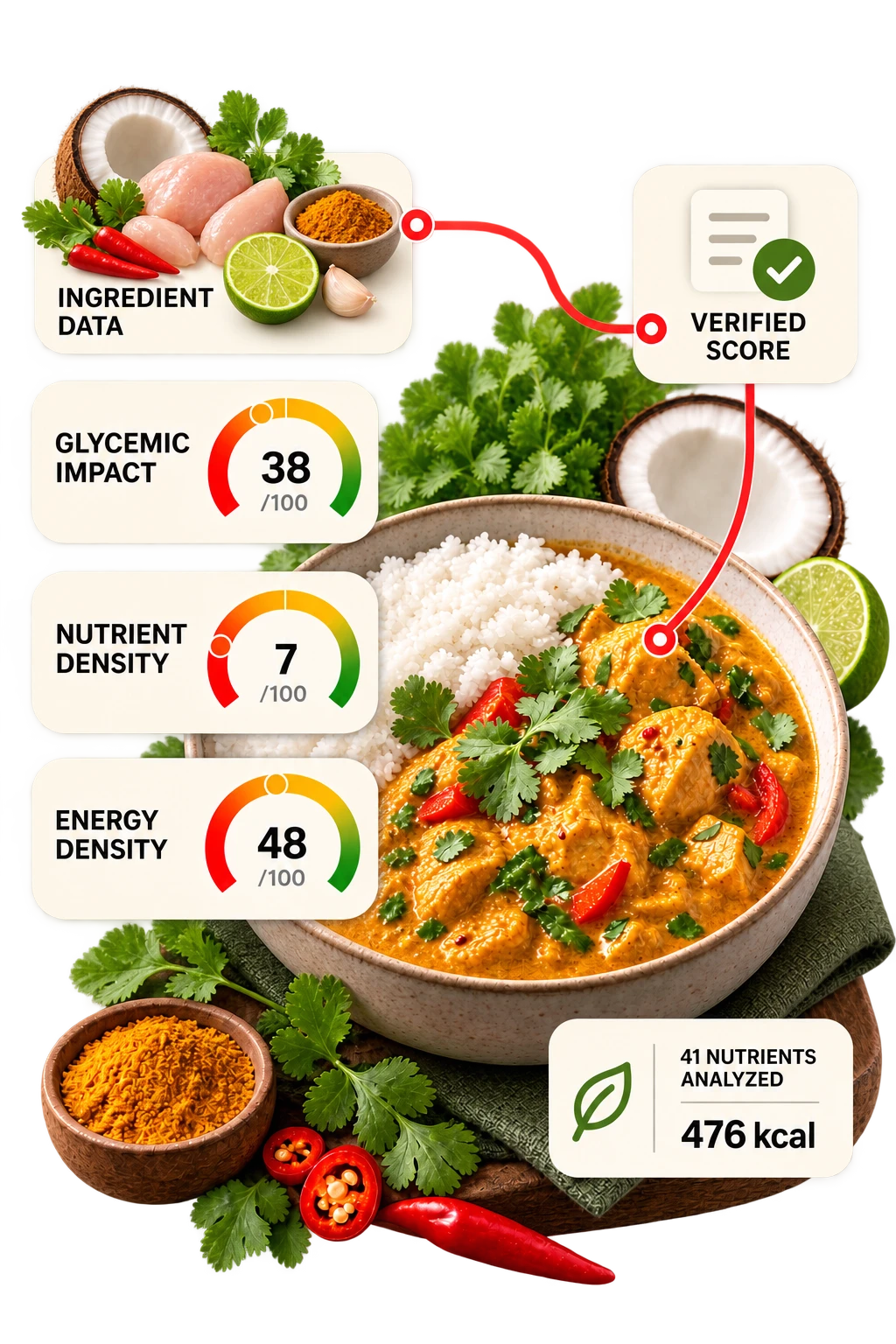
Calculates comprehensive health scores (0–100) for every food through transparent mathematical formulas combining Nutrient Density, Energy Density, and Glycemic Impact Score. Evaluates 41 nutritional parameters using geometric mean scoring that rewards balanced nutrition. Every score is fully decomposable and traceable to specific nutrients.

A Coconut Curry Chicken bowl with Ingredient Data linked to a Verified Score, three gauges reading Glycemic Impact 38/100, Nutrient Density 7/100 and Energy Density 48/100, and a panel noting 41 nutrients analyzed and 476 kcal.

3. FFHS (Focus-Fit Health System — Personalization Engine)

Tailored to Your Health Conditions

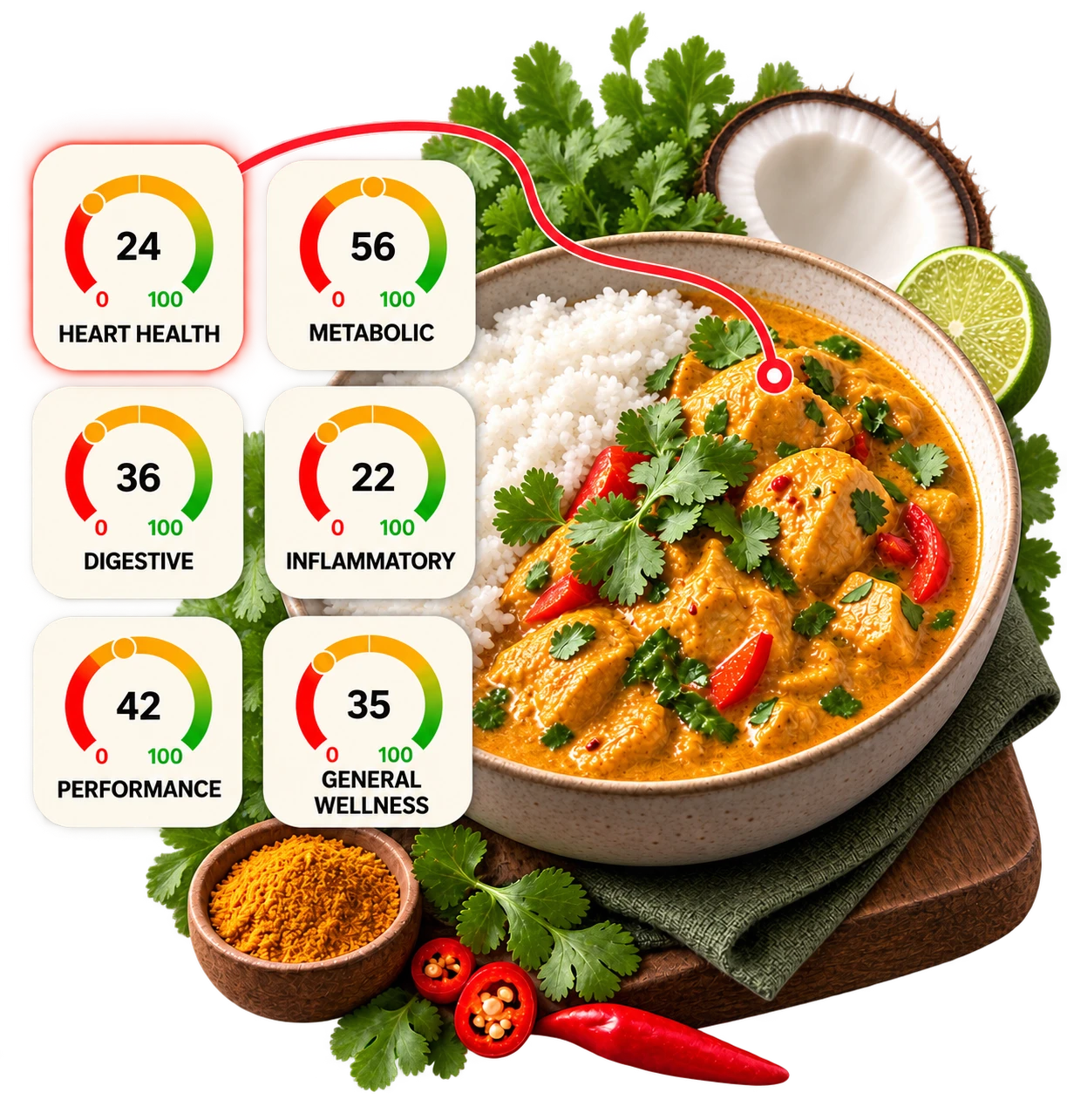
Applies condition-specific weighting matrices for six health dimensions: Heart Health, Metabolic Health, Digestive Health, Inflammatory Balance, Athletic Performance, and General Wellness. All weights are goal-specific and fully auditable.

Six health-goal gauges beside a Coconut Curry Chicken bowl -- Heart Health 24, Metabolic 56, Digestive 36, Inflammatory 22, Performance 42 and General Wellness 35, each out of 100, with Heart Health highlighted as the selected goal.

4. HPD (Health-per-Dollar Optimizer — Value Intelligence)

Healthiest Ingredients for the Lowest Price

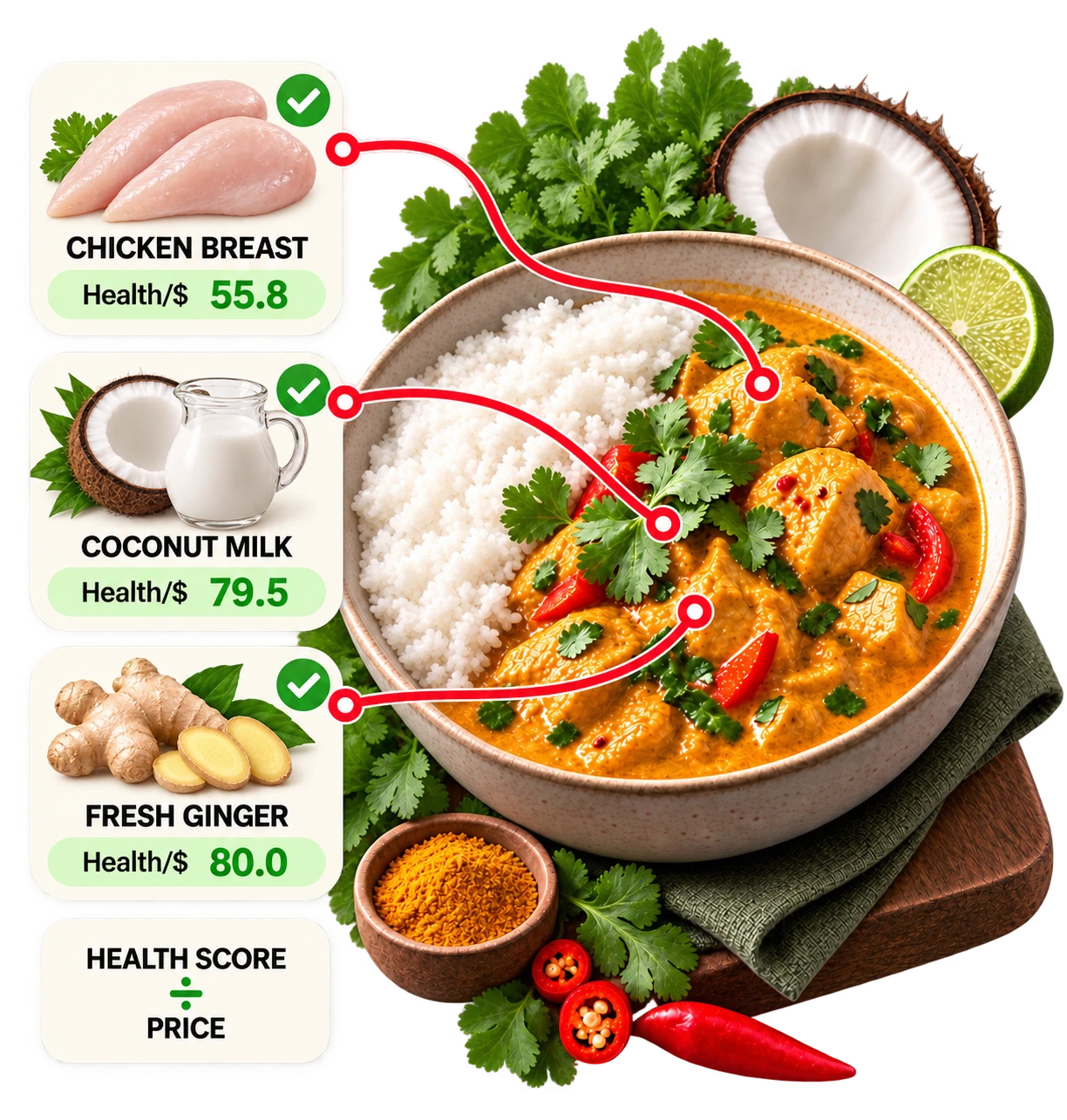
Calculates Health-per-Dollar ratios by dividing FFHS scores by price per 100g, pre-calculated at product entry. All HPD values are stored, runtime queries sort by the column for instant performance.

Three ingredient cards beside a Coconut Curry Chicken bowl showing a health-per-dollar figure for each -- Chicken Breast 55.8, Coconut Milk 79.5 and Fresh Ginger 80.0 -- above a card reading Health Score divided by Price.

5. ISLG (Intelligent Shopping List Generator — Procurement Bridge)

Your Grocery List, Optimized

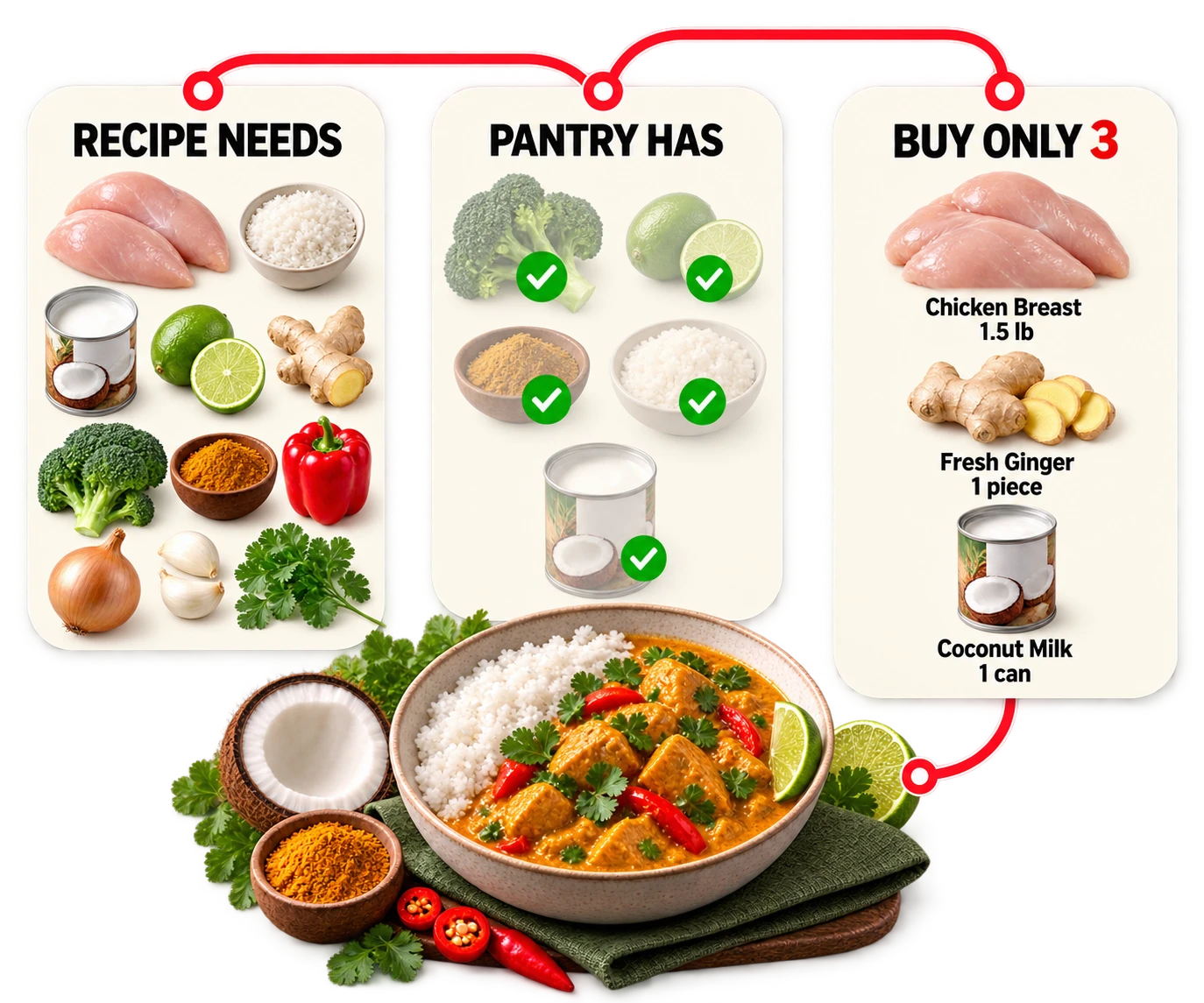
Converts optimized meal plans into optimized shopping lists through a 7-step workflow: ingredient aggregation, pantry reconciliation, gap calculation, spoilage checking, best HPD product selection, package quantity normalization, and final list generation.

Three panels above a Coconut Curry Chicken bowl: Recipe Needs listing every ingredient, Pantry Has showing broccoli, lime, spice, rice and coconut milk already checked off, and Buy Only 3 listing chicken breast, fresh ginger and coconut milk.

6. AMPE (Adaptive Meal Planning Engine — Optimization Core)

Mathematically Optimal Meal Plans

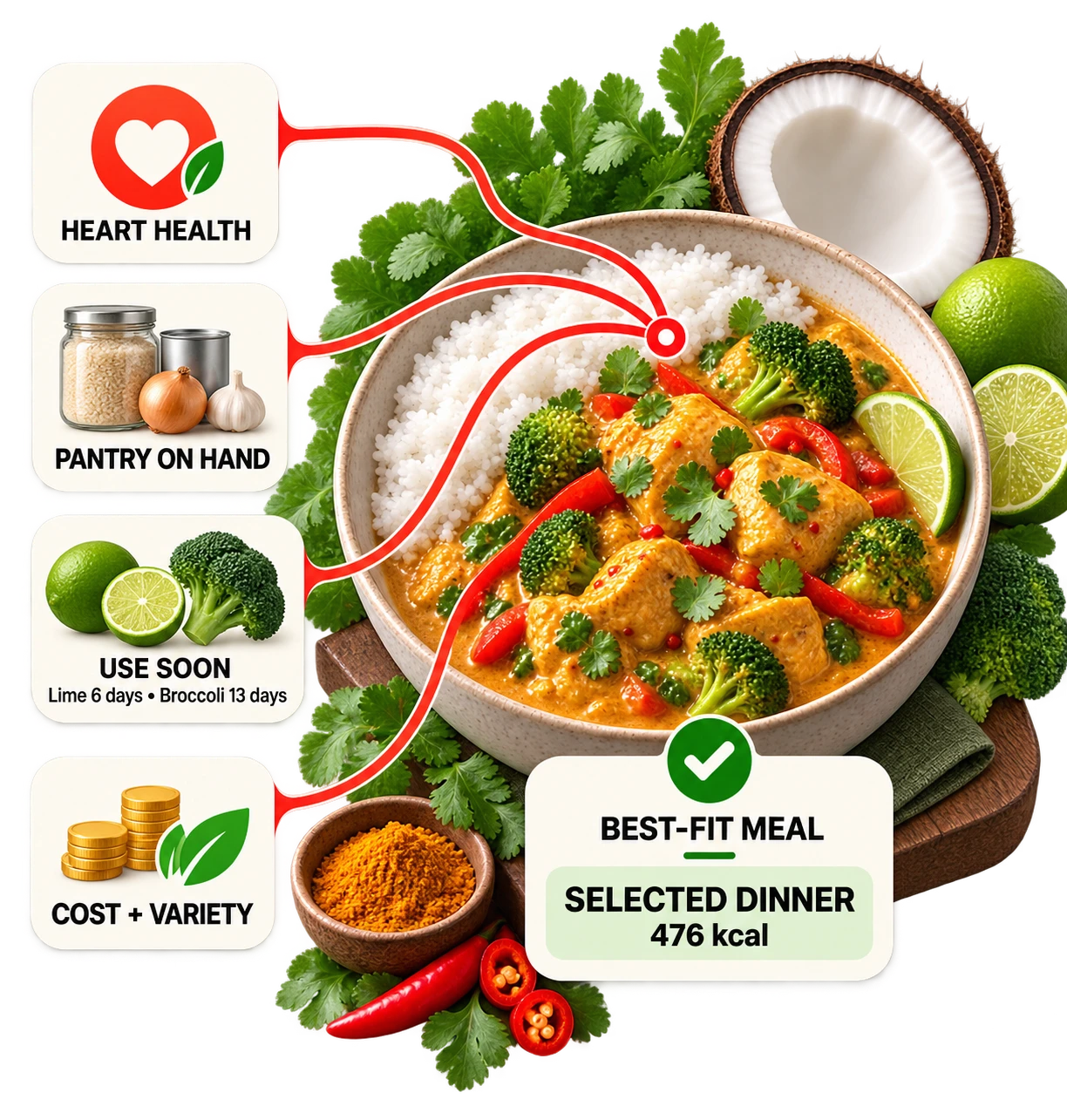
Uses MILP to create optimal weekly meal plans balancing nutrition, cost, variety, inventory, and health. Combines DNE scoring, FFHS personalization, SPM spoilage, and HPD rankings into one optimization.

A Coconut Curry Chicken bowl with four inputs linked to it -- Heart Health, Pantry On Hand, Use Soon (lime 6 days, broccoli 13 days) and Cost plus Variety -- resolving to a Best-Fit Meal card reading Selected Dinner, 476 kcal.

7. SPM (Spoilage Prediction Model — Temporal Intelligence)

Predicts When Your Food Will Spoil

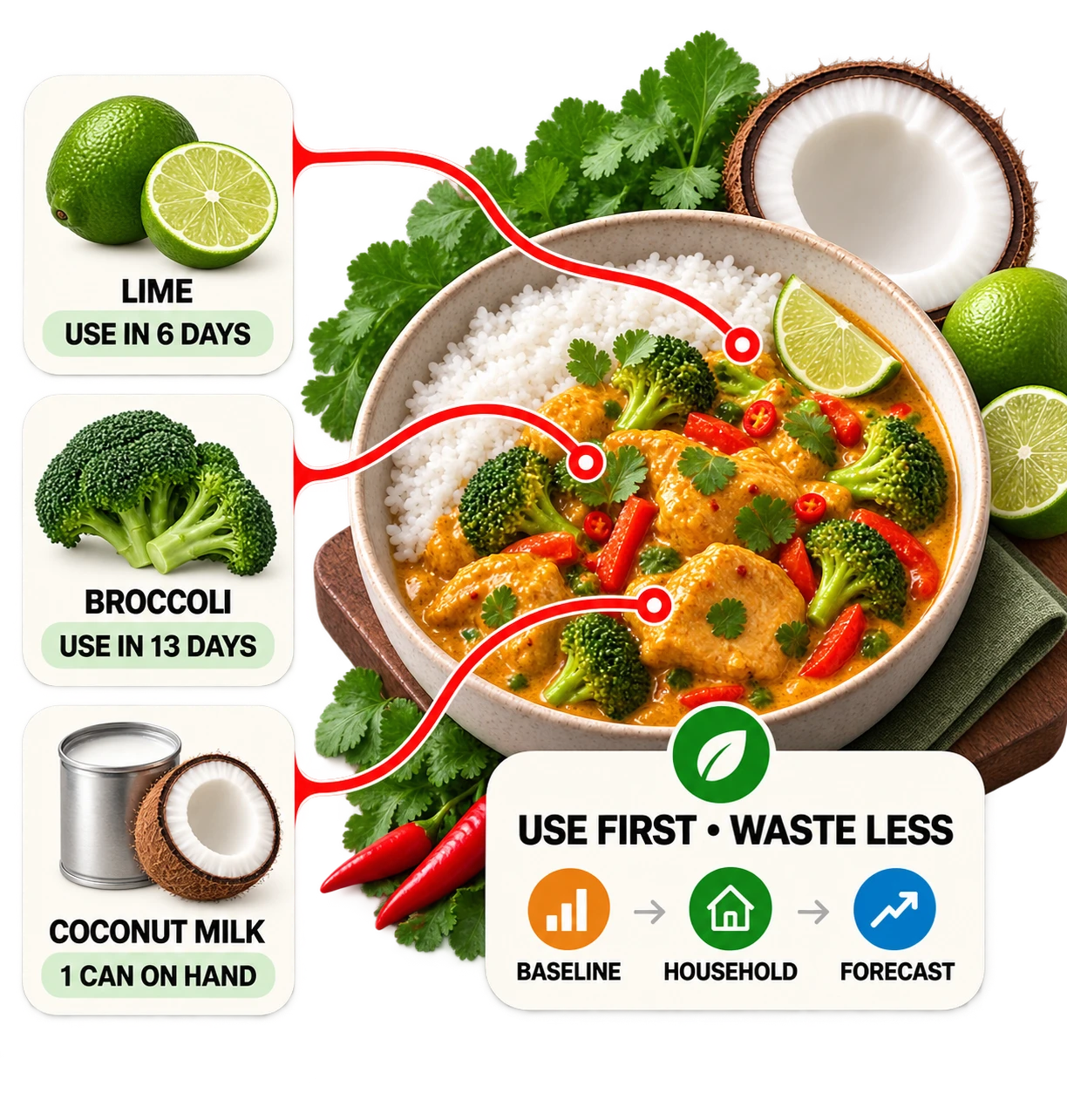
Predicts ingredient spoilage using a 3-tier Bayesian architecture: Tier 1 empirical baselines across 60+ food categories, Tier 2 Bayesian household adaptation using conjugate prior mathematics that personalizes to specific storage patterns.

Three ingredient cards beside a Coconut Curry Chicken bowl -- lime to use in 6 days, broccoli to use in 13 days and one can of coconut milk on hand -- linked to a Use First, Waste Less panel showing baseline, household and forecast stages.

8. UNL (Unified Nutrition Ledger — Data Backbone)

Every Meal & Every Score, Tracked

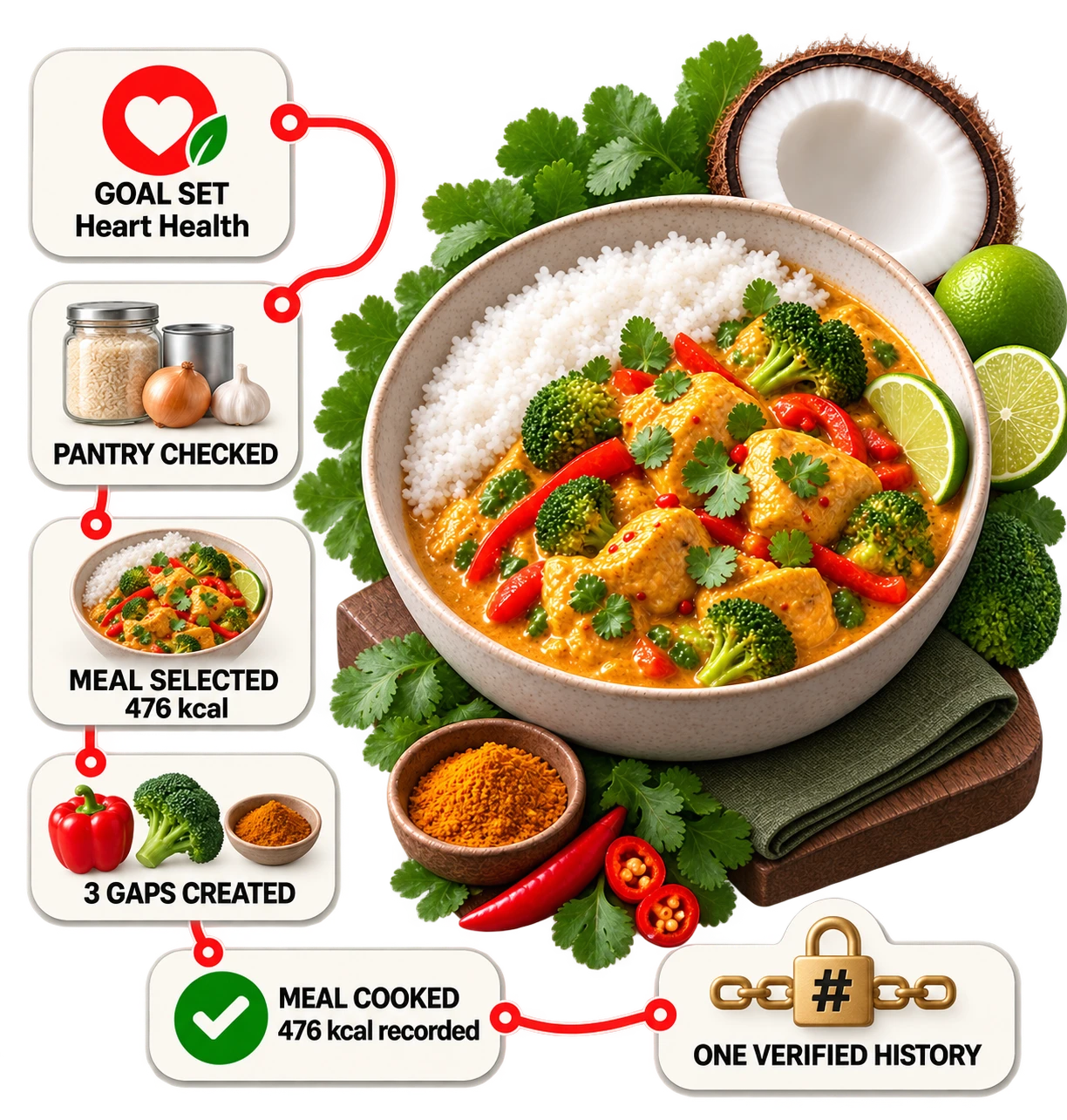
Single source of truth for the entire ecosystem. Immutable, append-only ledger with cryptographic hashing and complete temporal versioning. Every module reads from and writes to UNL, eliminating data fragmentation. Maintains comprehensive entity relationships across products, inventory, recipes, meals, and user profiles.

A chain of stages down the side of a Coconut Curry Chicken bowl -- Goal Set Heart Health, Pantry Checked, Meal Selected 476 kcal, 3 Gaps Created and Meal Cooked with 476 kcal recorded -- ending at a padlocked One Verified History card.

9. DNI™ Ecosystem (Integration Framework)

The Foundational Patent

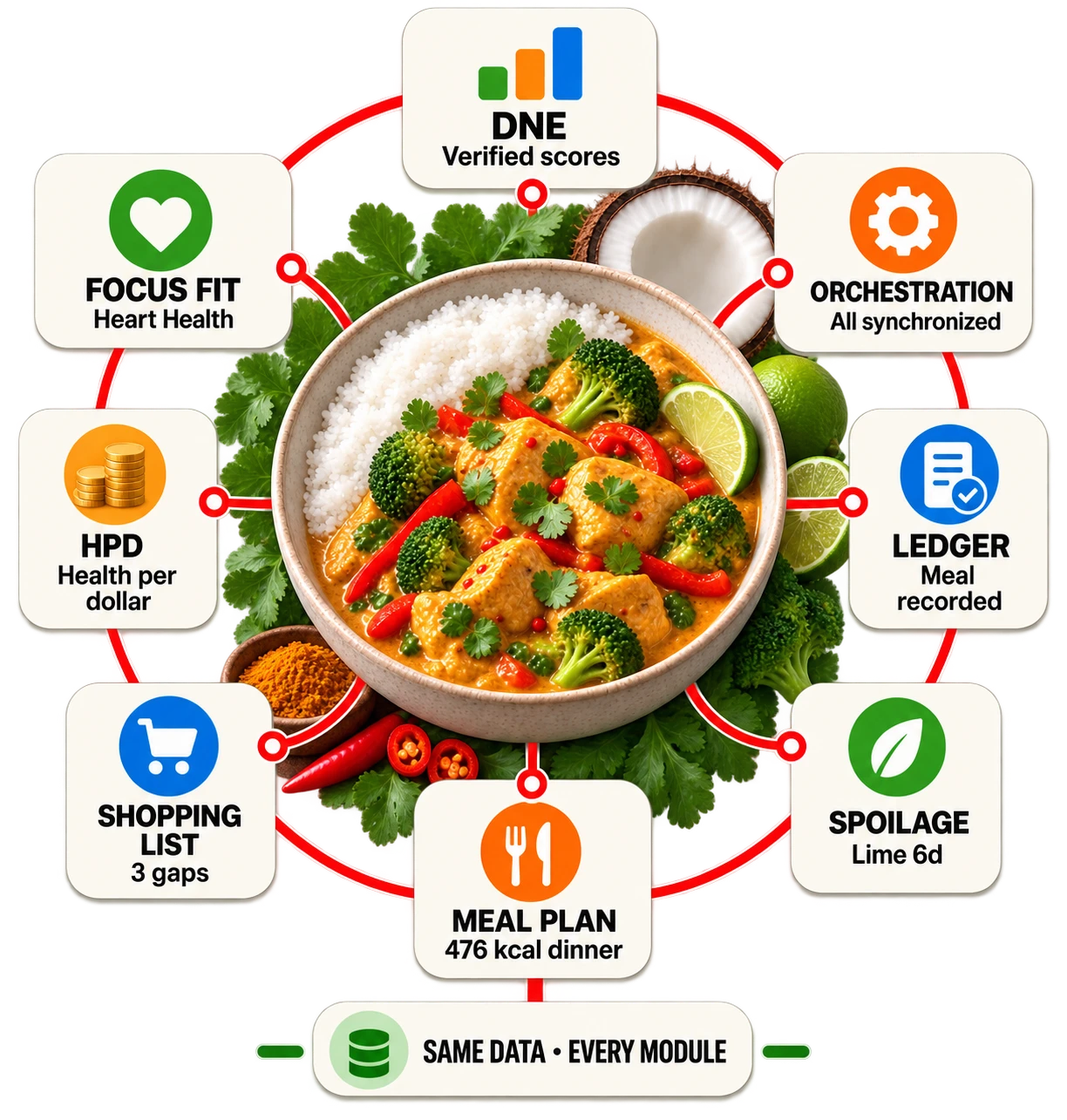
The foundational patent covering the complete integrated ecosystem architecture. Ensures all 8 operational modules function as a unified, synchronized system through shared data flows, standardized protocols, and the deterministic reproducibility guarantee. Addresses data fragmentation, opaque algorithms.

Eight module cards arranged in a ring around a Coconut Curry Chicken bowl -- DNE verified scores, Orchestration, Ledger, Spoilage, Meal Plan, Shopping List, Health per Dollar and Focus Fit -- above a strip reading Same Data, Every Module.

Get the app.

easyChef Pro is live on the App Store and Google Play. Score any recipe, plan the week, and let your pantry, meal plan and grocery list all working from the same information.

Free to download. 7-day Pro trial, no card required.
Your data is encrypted with AES-256 and TLS 1.3. We never sell your data.