App Features
What Makes Heart Healthy Recipes Different, and How Can You Check One?
Short Answer
Heart healthy recipes keep sodium and saturated fat low per serving and add fiber, in line with federal guidance on how much of each to eat in a day. The hard part is checking a recipe before you cook it: a dish can look light and still carry a lot of sodium from its sauce, or a lot of saturated fat from butter and cheese.
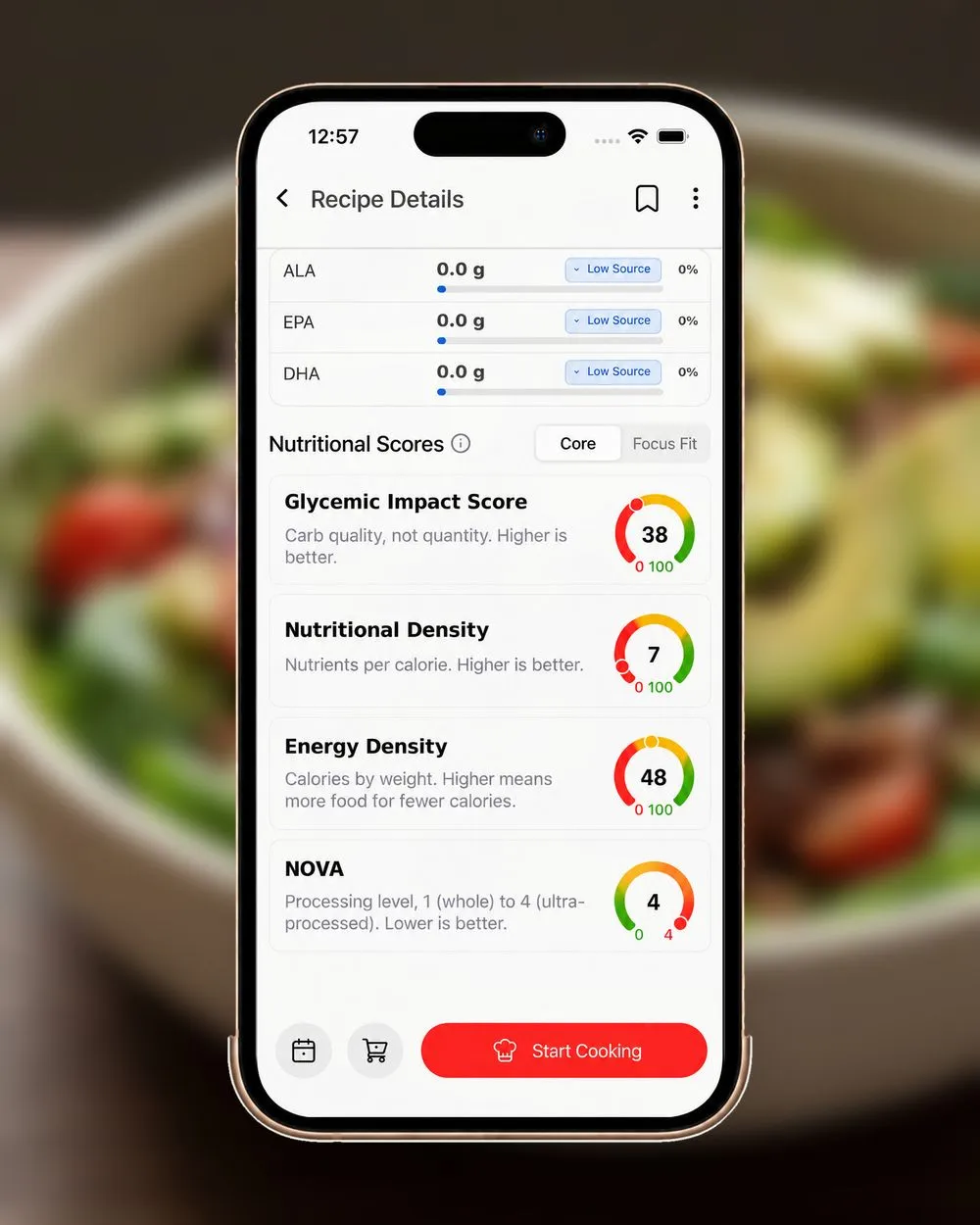
Know what to cook, what to eat, and what to buy. easyChef Pro brings your recipes, nutrition, meal plans, pantry and shopping together in one app. Open a recipe to see sodium, saturated fat and fiber per serving and, on recipes with Focus Fit data, a heart health score from 0 to 100. Then add the recipe to your meal plan and its products to your cart. This guide shows how to check a recipe step by step, and covers gut healthy recipes too.
What makes a recipe heart healthy?
There is no single official test that labels one recipe heart healthy. Most heart healthy recipe lists build on the same federal guidance. The Dietary Guidelines for Americans, 2025 to 2030 say:
- People ages 14 and above should consume less than 2,300 mg of sodium per day.
- In general, saturated fat should not exceed 10% of total daily calories.
- Prioritize fiber-rich whole grains, and avoid highly processed foods that are salty or sweet.
Source: Dietary Guidelines for Americans, 2025 to 2030.
Those are limits for a whole day of eating, not rules for one dish. A recipe that stays well inside them leaves room for everything else you eat that day. So the useful question is not "is this recipe healthy?" but "how much of my day does one serving use?"
How to check a recipe before you cook it
- Read sodium per serving, not per recipe. A pot of soup can look fine in total and still be heavy in each bowl. Sauces, stock, cheese and cured meats are the usual sources.
- Find the saturated fat. Butter, cream, cheese and fatty cuts carry most of it. Ask whether part of it can be swapped without losing the dish.
- Count the fiber. Beans, lentils, whole grains, vegetables and fruit add it. A recipe with almost none is worth pairing with a side that has some.
- Check the serving size. If a recipe for four feeds two, each plate carries double the numbers.
How easyChef Pro shows it, step by step
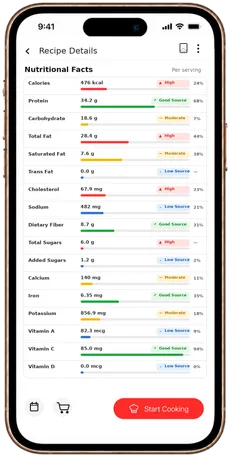
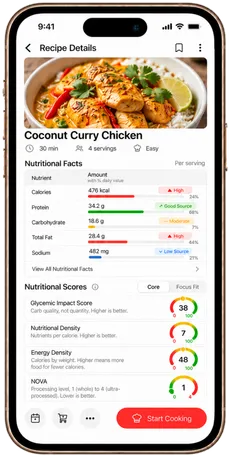
- Open a recipe. Nutritional Facts shows 20 nutrients per serving, each with a rating and the share of your own daily target. The list includes sodium, saturated fat, dietary fiber and potassium.
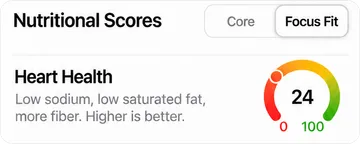
- Switch Nutritional Scores to Focus Fit. Recipes with Focus Fit data show six health-focus scores, each from 0 to 100, where higher is better: Heart Health, Metabolic, Digestive & Gut, Inflammation Control, Muscle & Performance and General Wellness. The app marks 71 to 100 as Good, 41 to 70 as Fair and 40 and under as Poor.
- Compare, or remix. Open Remix to swap, add or remove ingredients, tap Apply Changes, and compare the scores and nutrition before and after. Your remix is saved as its own recipe, so the original stays as it was.
- Put it in your week. From the recipe page, add it to a day and meal in your plan (date, meal type, servings).
Gut healthy recipes and the Digestive & Gut score
Gut healthy recipes usually lean on fiber, from vegetables, fruit, beans and whole grains, and on fermented foods such as yogurt, kefir, sauerkraut or kimchi. The Dietary Guidelines note that fermented foods and high-fiber foods support a diverse microbiome, which may be beneficial for health. In easyChef Pro, the same Focus Fit tab that shows Heart Health also shows a Digestive & Gut score, so one recipe page answers both questions.
What the numbers can and cannot tell you
A score is a summary of a recipe's ingredients. It is not a diagnosis, and it does not know your health history. What it does is put the facts in front of you before you cook: sodium, saturated fat and fiber per serving, and how the recipe scores for the focus you care about. If your doctor or dietitian gave you a plan, use these numbers to check recipes against it.
What makes easyChef Pro different
The problem was never you. The system was disconnected.
Most people find a recipe in one place, guess at its nutrition in another, and build a shopping list in a third. In easyChef Pro the recipe, its nutrition per serving, its scores, your meal plan and your cart are in one app:
- Add all of a recipe's products to your cart (a confirm step is shown).
- Send cart items to a Walmart cart.
You can also choose Heart as your Health Focus with the Balanced plan, and the automatic meal plan uses it as one of its inputs.
Related Reading
Frequently Asked Questions
- What makes a recipe heart healthy?
- There is no single official test for one recipe. The Dietary Guidelines for Americans, 2025 to 2030 set daily limits: less than 2,300 mg of sodium for people 14 and older, and saturated fat at no more than 10 percent of daily calories, with fiber-rich whole grains. A recipe that keeps sodium and saturated fat low per serving and adds fiber fits that guidance.
- What are some heart healthy recipes?
- Recipes built on vegetables, beans, lentils and whole grains, cooked with little added salt and less butter and cream, fit the federal guidance on sodium, saturated fat and fiber. In easyChef Pro, recipes with Focus Fit data show a Heart Health score from 0 to 100, so you can compare recipes before you cook.
- How can you make recipes more heart healthy?
- Use less salt and fewer salty sauces, swap some butter or cream for an ingredient with less saturated fat, and add beans or whole grains for fiber. In easyChef Pro, Remix lets you swap, add or remove ingredients and compare the scores and nutrition before and after you save.
- What are gut healthy recipes?
- Recipes with plenty of fiber from vegetables, fruit, beans and whole grains, and recipes with fermented foods such as yogurt or kimchi. The Dietary Guidelines note that these foods support a diverse microbiome, which may be beneficial for health. Recipes with Focus Fit data show a Digestive and Gut score in easyChef Pro.
- Do all recipes in easyChef Pro show a Heart Health score?
- No. Focus Fit scores appear on recipes with Focus Fit data. Those recipes show all six scores, including Heart Health and Digestive and Gut, each from 0 to 100, where higher is better.
CHECK BEFORE YOU COOK
See the Heart Health Score Before You Cook
Open a recipe in easyChef Pro to see its nutrition per serving and, where Focus Fit data exists, its Heart Health score. Then add it to your plan.



On a computer? Scan with your phone camera to get the app.