Weight loss calculator
Weight Loss Calculator: Calories and Goal Date
Try the free Weight Loss Calculator from easyChef Pro, the meal planning app that helps you reach your goals. Enter your current weight, how much weight you want to lose, and your preferred pace. Then let easyChef Pro help you plan meals that fit your calorie goals.
Julie from easyChef Pro
Your details



On a computer? Scan with your phone camera to get the app.
7 days free, then $7.99/month. Renews automatically.

How the weight loss calculator works out your calories and date
Choose how many pounds you want to lose and how fast. The calculator takes your maintenance calories, subtracts the daily deficit for that rate, and divides the pounds to lose by the weekly loss to get the number of weeks, using the common 3,500 calories per pound rule of thumb. The date is an estimate: it keeps the same daily calories the whole way and does not lower your maintenance as your weight falls, so for a large goal the real date is likely later (Hall et al., 2011). If the deficit would drop you below 1,200 calories per day, it stops at 1,200 and the date moves out to match. The percentage is the pounds you will lose divided by your current weight. Real loss is not a straight line, so treat the date as a guide.
How the calculator works out your numbers:
- Resting calories (BMR). It works out your BMR from your age, sex, weight and height with the Mifflin-St Jeor equation, built from measured resting energy use in 498 healthy adults (Mifflin et al., 1990). The equation was built on adults aged 19 to 78. In a 2005 comparison of four equations, it predicted resting rate within 10% of measured for more adults than the others, though it can be off for an individual (Frankenfield et al., 2005).
- Maintenance calories (TDEE). It multiplies your BMR by a factor for your activity level: 1.2 sedentary, 1.375 light, 1.55 moderate, 1.725 active, 1.9 very active. These factors are this calculator's own settings.
- Daily target. Your maintenance calories minus the daily deficit for your rate. This calculator does not give a target below 1,200 calories per day. That is its own limit, not a medical recommendation. If you are thinking of eating less than that, talk to a doctor or dietitian first.
- Macros and fiber. Protein, carbs and fat as a 30/45/25 share of your target calories. Fiber is the higher of 14 grams per 1,000 calories and 25 grams (women) or 38 grams (men); those fiber figures are Dietary Reference Intake values for adults 19 to 50.
The CDC says people who lose weight at a gradual, steady pace, about 1 to 2 pounds a week, are more likely to keep it off.
If you choose Prefer not to say, your calories use an average of the male and female equations, and your fiber minimum uses the value for women.
Any equation gives an estimate, not a measurement. Use your result as a starting point and adjust after a few weeks based on how your weight changes. For general wellness purposes only, not medical advice.
Sources: Mifflin et al. (1990) | Frankenfield et al. (2005) | Hall et al. (2011) | CDC: Losing weight | National Academies: Dietary Reference Intakes
Your health summary
BMR, TDEE and your daily calorie target in one place.
In the easyChef Pro app, the health summary shows your BMI, BMR, TDEE and daily calorie target together.
Set your goal in the app. easyChef Pro builds meals around the goal you set.
Get the app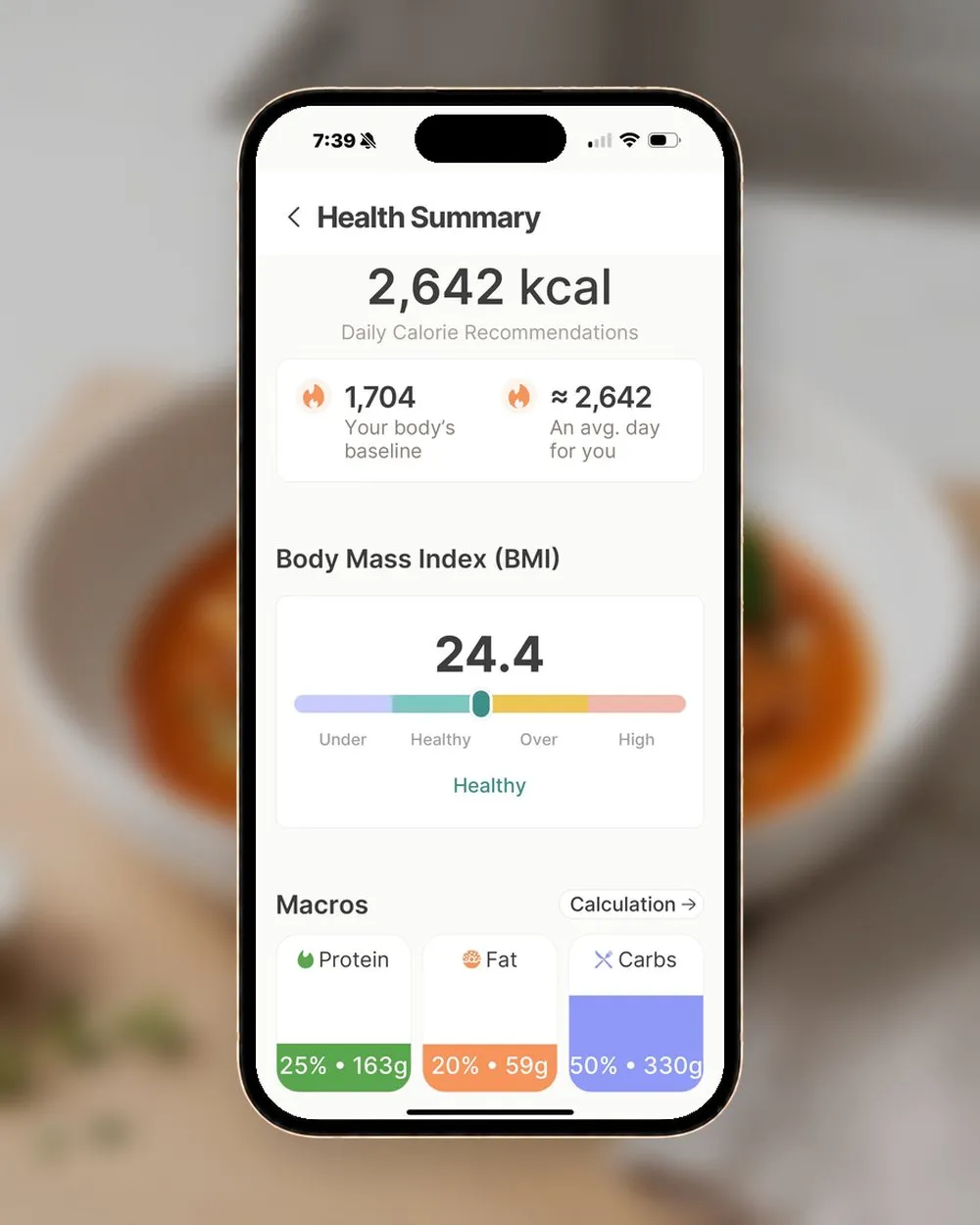
Frequently asked questions
How do I calculate how many calories to lose weight?
Start with your maintenance calories (your TDEE): your BMR from the Mifflin-St Jeor equation times an activity factor. Then subtract a deficit for the rate you want to lose. By a common rule of thumb about 3,500 calories is a pound, so a 500-calorie daily deficit is about a pound a week at first. The calculator above does this from your current weight, goal weight and chosen rate. It does not give a target below 1,200 calories per day; that is its own limit, not a medical recommendation.
How long will it take to lose the weight?
Divide the pounds you want to lose by your weekly rate of loss. Losing 20 pounds at 1 pound a week takes about 20 weeks; at 1.5 pounds a week, about 13 to 14 weeks. The calculator above gives you an estimated goal date. It keeps the same daily calories the whole way, and your maintenance falls as your weight does, so for a large goal the real date is likely later. Loss is rarely perfectly linear, but the trend over weeks is what matters.
How do I calculate my weight loss percentage?
Weight loss percentage is the share of your body weight you have lost: (starting weight minus current weight) divided by starting weight, times 100. Lose 15 pounds from a 180-pound start and that is 15 / 180 x 100 = 8.3 percent. The calculator above shows the percentage from your current weight to your goal, and the formula works the same for any two weigh-ins.
What is a safe rate of weight loss?
The CDC says people who lose weight at a gradual, steady pace, about 1 to 2 pounds a week, are more likely to keep it off. This calculator does not give a daily target below 1,200 calories; that is its own limit, not a medical recommendation.
What happens if my target is under 1,200 calories?
The calculator stops your target at 1,200 calories per day and moves your goal date out to match.
Why am I not losing weight even in a deficit?
The most common reasons are underestimating intake (untracked bites, oils, and drinks add up) or a maintenance number that dropped as you lost weight. Recalculate your target as your weight changes, track intake honestly against it, and judge progress over a few weeks, not day to day.
Does walking help with weight loss?
Yes. Walking raises the activity side of your maintenance calories, which widens your deficit without cutting more food. It is low-impact and easy to do daily. It will not out-run a big calorie surplus, but paired with a sensible target it makes the deficit easier to hit.
Ready to plan your goal date?
Enter your current and goal weight to get your daily calorie target and an estimated goal date.
Back to the calculator 
On a computer? Scan with your phone camera to get the app.
7 days free, then $7.99/month. Renews automatically.
Related calculators: TDEE calculator | Maintenance calorie calculator | BMR calculator | Calorie deficit calculator | Macro calculator | Protein calculator | DRI calculator