Bibimbap (Korean Mixed Rice Bowl)
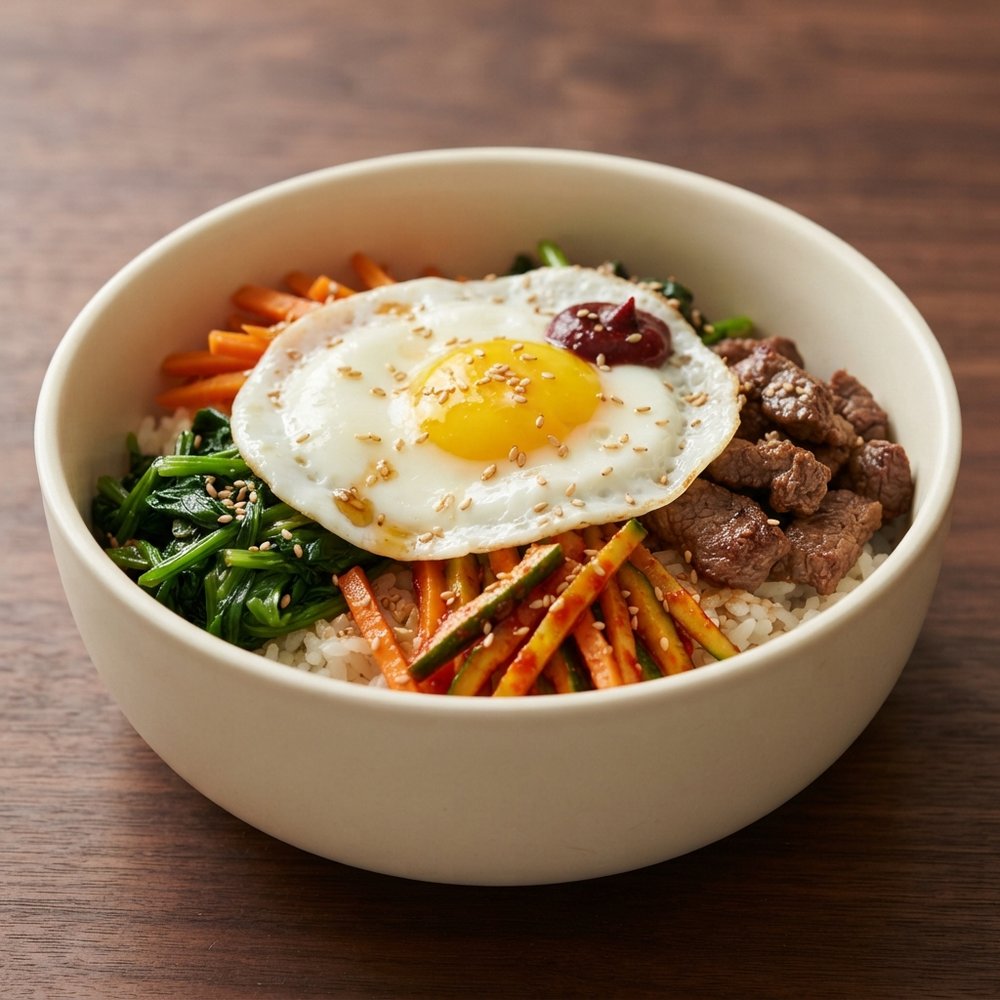
Bibimbap (Korean Mixed Rice Bowl) brings together warm rice with crisp cucumber, garlicky spinach, and sweet sautéed carrots, all topped with seared beef and a soft egg. The gochujang adds balanced heat, while toasted sesame oil and seeds lend nutty depth. Serve for a satisfying weeknight dinner or a colorful weekend meal that lets everyone mix to their taste.
- Prep30 mins
- Cook30 mins
- Serves4
- DifficultyMedium
easyChef Pro health score
Calculated from USDA-referenced nutrient data for the ingredients in Bibimbap (Korean Mixed Rice Bowl), not estimated by an AI model. The same recipe returns the same score every time.
- Glycemic ImpactFair
- 54 / 100
- Carb quality, not quantity. Higher is better.
- Nutritional DensityPoor
- 27 / 100
- Nutrients per calorie. Higher is better.
- Energy DensityFair
- 50 / 100
- Calories by weight. Higher means more food for fewer calories.
- NOVA Unprocessed or minimally processed
- 1 / 4
- Processing level, 1 (whole) to 4 (ultra-processed). Lower is better.
How it scores for each health goal
The same recipe scores differently against different goals, because the goal changes the calculation rather than filtering a list. Set your goal in easyChef Pro and every recipe is scored against it.
- 36
- Heart Health
- 66
- Metabolic
- 37
- Digestive
- 34
- Inflammatory
- 43
- Performance
- 42
- General Wellness
- 1
Mix the cucumber pieces with the gochujang paste in a bowl; set aside.
- 2
Bring about 2 cups of water to a boil in a large nonstick skillet and stir in the spinach; cook until it turns bright green and wilts, 2 to 3 minutes.
- 3
Drain the spinach and squeeze out as much moisture as you can; place the spinach in a bowl and stir in the soy sauce.
- 4
Heat 1 teaspoon of olive oil in a large nonstick skillet; cook and stir the carrots until softened, about 3 minutes.
- 5
Stir in the garlic and cook just until fragrant, about 1 minute. Stir in the cucumber mixture; sprinkle with red pepper flakes. Transfer the carrot mixture to a bowl and set aside.
- 6
Brown the beef in a clean nonstick skillet over medium heat, about 5 minutes per side; set aside.
- 7
Heat the remaining 1 teaspoon of olive oil in another nonstick skillet over medium-low heat. Fry the eggs on just one side until the yolks are runny but the whites are firm, 2 to 4 minutes.
- 8
Divide the cooked rice among 4 large serving bowls; top with the spinach mixture, a few pieces of beef, and the cucumber mixture. Place 1 egg on top of each serving. Drizzle each bowl with 1 teaspoon sesame oil, a sprinkle of sesame seeds, and a small amount of gochujang paste if desired.
- Calories 1252.45 kcal High 63%
- Protein 66.87 g Good Source 134%
- Carbohydrate 189.01 g 69%
- Total Fat 22.55 g High 29%
- Saturated Fat 6.94 g High 35%
- Trans Fat 0.06 g High --
- Cholesterol 336.15 mg High 112%
- Sodium 1006.55 mg High 44%
- Dietary Fiber 4.25 g Moderate 15%
- Total Sugars 8.55 g --
- Added Sugars 0.0 g Low Source 0%
- Calcium 240.03 mg Moderate 18%
- Iron 12.92 mg Good Source 72%
- Potassium 950.98 mg Good Source 20%
- Vitamin A 533.3 mcg Good Source 59%
- Vitamin C 32.12 mg Good Source 36%
- Vitamin D 1.02 mcg Low Source 5%
Values are per serving. Percent Daily Values are based on a 2,000-calorie diet.
- Eggs 🥚
- Soy 🌱
- Wheat 🌾
- Gluten
- Sesame
- Garlic 🧄
About This Recipe
Bibimbap (Korean Mixed Rice Bowl) is a Korean dinner recipe made with 13 ingredients. It takes about 1 hr, serves 4, and is rated medium. Key ingredients include Carrot, Cucumber, Eggs, and Garlic. Each serving provides about 1252.45 kcal, and is a good source of protein.
Recipe Questions
- What is Bibimbap (Korean Mixed Rice Bowl)?
- It is a Korean recipe made with 13 ingredients, usually served for dinner or lunch.
- What is Bibimbap (Korean Mixed Rice Bowl) made of?
- The main ingredients are Carrot, Cucumber, Eggs, Garlic, Gochujang Base. The full list of 13 is above.
- What goes well with Bibimbap (Korean Mixed Rice Bowl)?
- Explore these Korean side-dish recipes.
- How long does it take to make Bibimbap (Korean Mixed Rice Bowl)?
- About 1 hr in total: 30 mins to prepare and 30 mins to cook.
- How many calories are in one serving?
- One serving provides about 1252.45 kcal. The full nutrition breakdown is above.
- Is Bibimbap (Korean Mixed Rice Bowl) easy to make?
- This recipe is rated medium, with 13 ingredients and 8 steps.
- Is Bibimbap (Korean Mixed Rice Bowl) healthy?
- Bibimbap (Korean Mixed Rice Bowl) has an easyChef Pro health score of 47/100. Per serving, it provides 1252.45 calories and 66.87 g of protein, or 134% of the Daily Value. It is a good source of iron, potassium, vitamin A and vitamin C. Worth noting per serving: sodium at 1006.55 mg (44% of the Daily Value) and saturated fat at 6.94 g (35% of the Daily Value). It contains Eggs, Soy, Wheat, Gluten, Sesame and Garlic, so it may not be suitable for people with those allergies or dietary restrictions. Whether it fits your goals depends on your complete meal plan and nutritional needs. Remix it in easyChef Pro to adjust the ingredients and generate fresh nutrition and scores.
How easyChef Pro scores recipes and products
easyChef Pro analyzes up to 41 nutrients using data sourced from USDA and other verified food databases. Its scoring method uses the nutrients relevant to nutrition quality, calorie density, processing level, and your selected health goal. Recipes and food products get a health score from 0 to 100, calculated using consistent rules instead of being estimated by AI. The same nutrition data, serving size and health goal will produce the same result.
The calculation evaluates nutrients, calorie density, processing level, and how well the food supports your selected health goal. Protein, fiber, vitamins, minerals and other beneficial nutrients can strengthen the score. High amounts of sodium, saturated fat, added sugar and other nutrients may lower it.
Your health goal also matters. easyChef Pro evaluates recipes and products across six health areas and adjusts their importance for your selected goal. This means the same food may be a better fit for one health goal than another.
For recipes, changing an ingredient, quantity or serving size changes the nutrition and may change the score. Remix the recipe in easyChef Pro to calculate fresh nutrition and scores for the version you actually make. Product scores are based on the nutrition and serving information associated with that specific product.
Score a recipe free, no app required